Have you ever wondered how banks, post offices, and large offices print stacks of documents in mere seconds? The secret often lies in a specialized machine called a drum printer. Unlike conventional printers, drum printers use a rotating metal drum to transfer text onto paper at incredible speeds. But what exactly makes them unique, and how do they work? Let’s explore the fascinating world of drum printers.
Read More: Unlocking the Hidden Power and Endless Potential of Storage Devices
What is a Drum Printer?
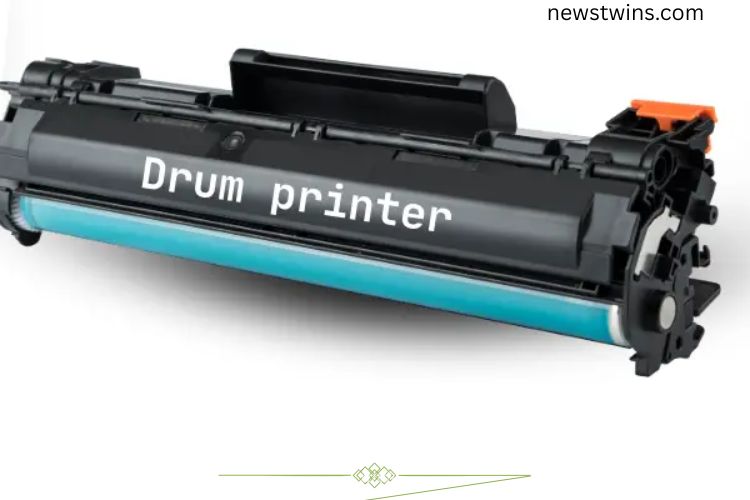
A drum printer is a type of impact printer designed for high-speed, high-volume printing. It features a cylindrical metal drum with pre-formed characters on its surface. As the drum rotates, hammers strike an ink ribbon against the paper, transferring the characters in precise lines.
While modern laser and inkjet printers have mostly replaced drum printers for everyday use, industries that demand speed and durability continue to rely on them. Their ability to print entire lines at once makes them indispensable for bulk printing tasks.


How Does a Drum Printer Work?
Drum printers operate through a combination of mechanical precision and speed. Here’s a step-by-step breakdown of the process:
- Drum Rotation: A cylindrical drum with embossed characters spins continuously.
- Paper and Ribbon Placement: The paper and ink ribbon are positioned between the drum and the hammers.
- Hammer Strikes: Hammers hit the ribbon at precise moments, pressing characters onto the paper.
- Line Printing: Multiple hammers strike simultaneously, forming complete lines in a single pass.
- High-Speed Output: This method allows rapid printing, making drum printers ideal for bulk tasks.
This design ensures quick, consistent printing and handles large volumes without frequent interruptions.
Speed of Drum Printers
One of the standout features of drum printers is their impressive speed. They can print anywhere from 300 to 2,000 lines per minute (LPM), depending on the model.
- High-Volume Printing: Ideal for tasks requiring rapid output, such as bank statements or shipping labels.
- Efficiency Measurement: Speed is quantified in LPM, reflecting the number of lines produced per minute.
- Performance Advantage: Drum printers outperform many other impact printers for large-scale printing, although modern laser printers surpass them in versatility and graphics.
Their unmatched efficiency in bulk printing makes them a favorite in industries where time and volume are critical.
Uses of Drum Printers
Drum printers excel in environments where fast, continuous printing is necessary. Here’s how various sectors utilize them:
Banks
Banks rely on drum printers to produce account statements, receipts, and transaction records quickly. This ensures smooth customer service and minimizes waiting times.
Post Offices
Post offices use drum printers to print addresses, mailing labels, and bulk correspondence. The printers streamline mail sorting and reduce delays.
Factories
Factories print production orders, item lists, and work schedules with drum printers. High-speed printing keeps manufacturing lines organized and efficient.
Hospitals
Hospitals use drum printers for patient records, test results, and medical forms. Rapid output is crucial, especially during emergencies.
Airports
Airports print boarding passes, tickets, and baggage labels using drum printers. Their speed helps handle large passenger volumes efficiently.
Government Offices
Government agencies rely on drum printers to process forms, certificates, and official documents. Bulk printing saves time and ensures consistency.
Libraries
Libraries print overdue notices, book records, and library cards with drum printers. Quick printing makes large-scale management effortless.
Schools
Schools generate report cards, exam results, and attendance records using drum printers. This supports the efficient handling of student data.
Supermarkets
Supermarkets print price tags, discount labels, and inventory sheets quickly, simplifying stock management.
Shipping Companies
Shipping and logistics companies produce labels, invoices, and tracking information efficiently with drum printers, improving operational speed.
Advantages and Disadvantages of Drum Printers
Advantages
- High-Speed Printing: Can produce thousands of lines quickly.
- Durable and Reliable: Long-lasting drum mechanism suitable for continuous printing.
- Bulk Efficiency: Prints full lines at once, reducing printing time.
- Cost-Effective for Large Jobs: Economical for industries with high-volume needs.
- Low Maintenance: Requires minimal upkeep for routine operations.
- Energy Efficient: Consumes less power compared to multiple smaller printers.
Disadvantages
- No Color Printing: Limited to monochrome output.
- Noisy Operation: Mechanical strikes generate sound during printing.
- Low Resolution: Not suitable for detailed graphics or images.
- Bulky Design: Large and heavy, requiring significant space.
- High Initial Cost: Expensive compared to smaller desktop printers.
- Limited Paper Handling: Supports mainly standard paper sizes.
Difference Between Drum Printers and Line Printers
| Features | Line printer | Drum printer |
| Printing Speed | Good for smaller jobs | Faster for large printing tasks |
| Mechanism | Simple hammer striking method | Rotating drum with pre-formed characters |
| Cost | Generally cheaper | More expensive initial cost |
| Maintenance | Easy to maintain | Requires more maintenance |
| Paper Handling | Limited | Limited, but works for bulk printing |
| Graphics Printing | Cannot print graphics | Cannot print graphics |
Frequently Asked Questions:
What is a drum printer?
A drum printer is a type of impact printer that uses a rotating metal drum with pre-formed characters to print text on paper. It is designed for high-speed, high-volume printing.
How does a drum printer work?
The drum spins while hammers strike an ink ribbon against paper, forming characters line by line. This allows fast and efficient bulk printing.
What industries use drum printers?
Drum printers are widely used in banks, post offices, factories, hospitals, airports, government offices, libraries, schools, supermarkets, and shipping companies for high-volume printing tasks.
How fast can a drum printer print?
Depending on the model, drum printers can print between 300 to 2,000 lines per minute (LPM), making them ideal for large-scale printing operations.
What are the advantages of drum printers?
They offer high-speed printing, durability, low maintenance, cost-effectiveness for bulk jobs, and the ability to print full lines at once.
What are the disadvantages of drum printers?
They are noisy, cannot print graphics or colors, are bulky, have limited paper handling, and require special ink ribbons.
How do drum printers differ from line printers?
Line printers use a simple hammer mechanism and are generally cheaper, while drum printers use a rotating drum with pre-formed characters for faster, high-volume printing.
Conclusion
Drum printers remain a powerful solution for high-speed, large-volume printing. Their unique design, using a rotating drum and impact hammers, allows industries to handle massive document workloads efficiently and reliably. From banks and post offices to factories, hospitals, and airports, these printers continue to deliver unmatched speed and durability where bulk printing matters most. While modern printers offer color, graphics, and compact designs, drum printers excel in speed, reliability, and cost-effectiveness, making them an ideal choice for continuous, large-scale printing tasks. Understanding how drum printers work, their advantages, and limitations helps businesses choose the right printing solution to maximize efficiency and productivity.