
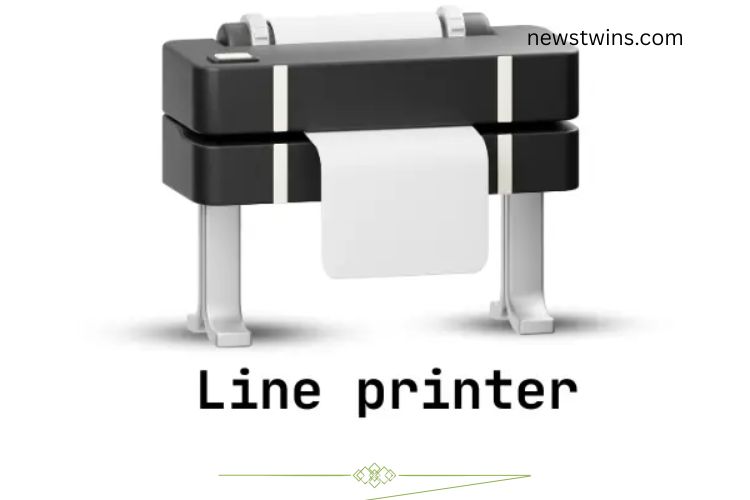
Line printers were once the fastest printing machines in the world. These printers could produce an entire line of text at once, making them invaluable for businesses and organizations that needed to handle large volumes of documents quickly. From banks to factories, line printers were the backbone of high-speed printing for decades. This article explores the workings, types, applications, advantages, and limitations of line printers.
Read More: Ultimate Guide to Printers: Discover the Exciting World of Cutting-Edge Printing Technologies
What Is a Line Printer?
A line printer is a high-speed printing device that prints an entire line of text in a single operation, unlike character printers that print one character at a time. Its speed and efficiency made it a favorite in offices, banks, and large companies that required mass document printing. While modern printers have largely replaced line printers, their impact on early computing and business operations remains significant.
How Does a Line Printer Work?
Line printers operate through impact printing. They use a rotating drum, chain, band, or wheel with pre-formed characters. Tiny hammers or pins strike the paper through an inked ribbon, creating a line of text in a single motion. This mechanism allows for incredibly fast printing compared to dot-matrix or inkjet printers.

Key Components:
- Rotating Drum or Chain: Houses characters that spin into position.
- Hammers or Pins: Strike the paper to transfer ink and form text.
- Impact Printing: The physical strike ensures high-speed printing.
- Full-Line Output: Prints an entire line at once for efficiency.
The combination of these components makes line printers extremely fast and durable, capable of printing thousands of lines per hour.
Types of Line Printers
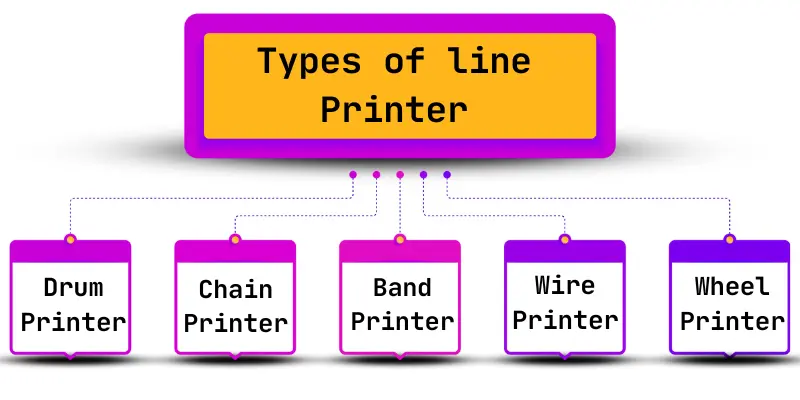
Several types of line printers were developed to meet different printing needs. Each uses a unique method to create text quickly and efficiently.
Drum Printer
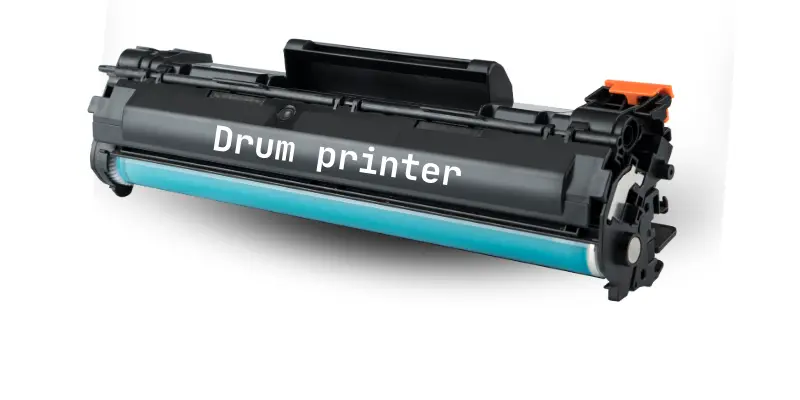
A drum printer has a cylindrical drum with characters on its surface. As the drum rotates, the correct characters align with the paper, and hammers strike to print the full line. Drum printers are fast but have a limited number of character sets.
Chain Printer
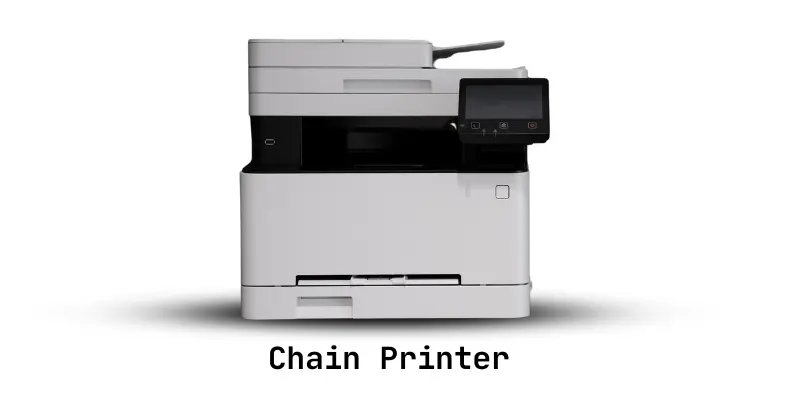
Chain printers use a long chain of characters that moves continuously. When the correct character aligns with the paper, a hammer strikes it to print. Chain printers are faster than drum printers and ideal for large-scale printing.
Band Printer
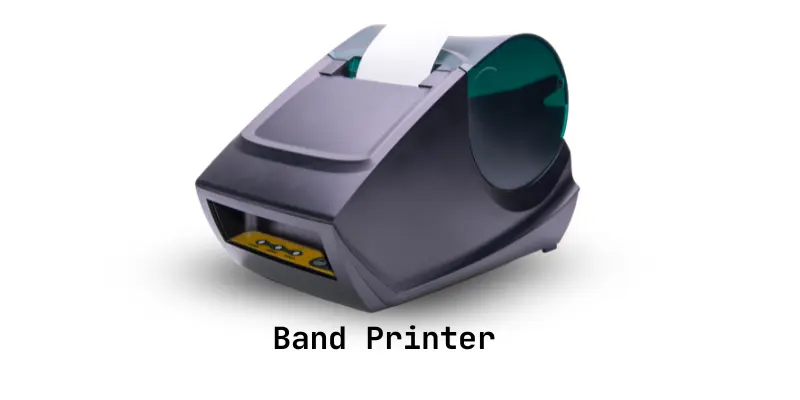
Band printers operate similarly to chain printers but use a thin, flexible band of characters. The band moves horizontally across the paper, and hammers strike to print text. These printers are reliable and offer consistent speed.
Wire Printer
Wire printers use multiple thin wires to strike an inked ribbon and transfer characters to paper. Simple in design, wire printers were popular in the past for their speed and ease of maintenance. They are less common today due to technological advances.
Wheel Printer
Wheel printers use a rotating wheel with characters arranged like a flower. As the wheel spins, hammers strike the desired character onto the paper. Wheel printers can print one line at a time with high accuracy.
Uses of Line Printers
Line printers were widely used wherever fast, high-volume printing was required. Their applications spanned multiple industries:
- Business Offices: Printing invoices, reports, and correspondence.
- Banks: Quickly generating statements and transaction records.
- Factories: Producing labels, shipping tags, and inventory lists.
- Hospitals: Printing patient records and medical reports.
- Libraries: Creating catalog lists and large-scale print jobs.
- Government Offices: Printing forms, records, and official documents.
- Airlines: Generating boarding passes and ticket information.
- Warehouses: Printing shipping labels and product lists.
- Schools: Producing student records, exam papers, and administrative documents.
The versatility and speed of line printers made them essential tools for organizations with significant printing demands.
Advantages of Line Printers
Line printers offered numerous benefits, particularly for businesses with large printing requirements:
- Extremely fast printing speed for high-volume tasks.
- Cost-effective for large print jobs.
- Durable and long-lasting design.
- Simple maintenance and easy repairs.
- Reliable output with continuous paper feeding.
- Consistent performance for repetitive printing tasks.
These advantages made line printers a preferred choice for decades, particularly before the advent of modern laser and inkjet technology.
Limitations of Line Printers
Despite their speed, line printers also had drawbacks:
- Limited to text; cannot print graphics.
- Noisy operation due to impact printing.
- Slower for smaller jobs compared to modern printers.
- Occupy significant space in offices.
- Outdated technology with limited font options.
- Lower print quality compared to current standards.
- Heavy and less portable than modern alternatives.
These limitations eventually led to line printers being replaced by quieter, more versatile, and higher-quality printing technologies.
Frequently Asked Questions:
What is a line printer and how does it work?
A line printer is a high-speed printer that prints an entire line of text at once using impact printing. It works with a rotating drum, chain, band, or wheel, where hammers or pins strike an inked ribbon to transfer text onto paper quickly.
Are line printers still used today?
Line printers are mostly obsolete, replaced by laser and inkjet printers. However, some legacy systems in large organizations may still use them for high-volume text printing.
Why were line printers so fast compared to other printers?
Line printers print an entire line at once, rather than one character at a time, dramatically reducing printing time and increasing efficiency for bulk documents.
What is the difference between a line printer and a dot matrix printer?
A line printer prints an entire line of text at once using impact technology, while a dot matrix printer prints one character at a time using a matrix of dots. Line printers are much faster for large-volume printing.
How fast could line printers print?
Depending on the type, line printers could print thousands of lines per hour, making them ideal for high-volume office environments and large businesses.
Which type of line printer is the fastest?
Chain and band printers are generally faster than drum, wheel, or wire printers, especially when printing large volumes of text.
Can line printers print images or graphics?
No, line printers are limited to text-only printing. They are not designed for graphics or high-resolution images.
Why did businesses prefer line printers in the past?
Businesses relied on line printers because they were durable, cost-effective, and capable of printing massive amounts of documents quickly, saving time and labor.
Conclusion
Line printers revolutionized high-volume printing, offering unmatched speed and reliability in their time. From banks and factories to government offices and hospitals, they handled massive document loads efficiently and cost-effectively. While modern printers have largely replaced them, understanding line printers—their types, uses, advantages, and limitations—highlights an important chapter in the evolution of printing technology. Their legacy reminds us how innovation in speed, durability, and efficiency can transform business operations and set the foundation for today’s advanced printing solutions.