Microcomputers are compact, affordable computers designed primarily for personal use. Often referred to as personal computers, these devices are built around a central microprocessor that acts as the brain of the machine. Common forms include desktops, laptops, and tablets, all of which serve a variety of purposes—from studying and office work to gaming and entertainment. Today, microcomputers are a staple in homes, schools, and workplaces, empowering users with convenience and versatility.
Read More: Unleashing the Secrets: The Striking Differences Between RAM and ROM You Must Know
The History of Microcomputers
The journey of microcomputers began in the early 1970s with a breakthrough in microprocessor technology. In 1971, Intel introduced the Intel 4004, the world’s first microprocessor. This tiny chip revolutionized computing by enabling the creation of small, affordable computers.
In 1975, the Altair 8800 became the first commercially available microcomputer. Unlike modern devices, it relied on switches and lights for input and output, lacking a screen or keyboard. A year later, Steve Jobs and Steve Wozniak launched the Apple I, a more user-friendly microcomputer equipped with a keyboard and display connectivity.
The personal computer industry took a major leap in 1981 when IBM introduced its first personal computer, the IBM PC. Its popularity grew rapidly in homes and offices, inspiring other companies to develop microcomputers that were smaller, faster, and more affordable.
Today, laptops, desktops, and tablets dominate the market, providing users with powerful tools for learning, working, and entertainment. Microcomputers have evolved from basic experimental machines to indispensable devices that influence nearly every aspect of daily life.

Types of Microcomputers
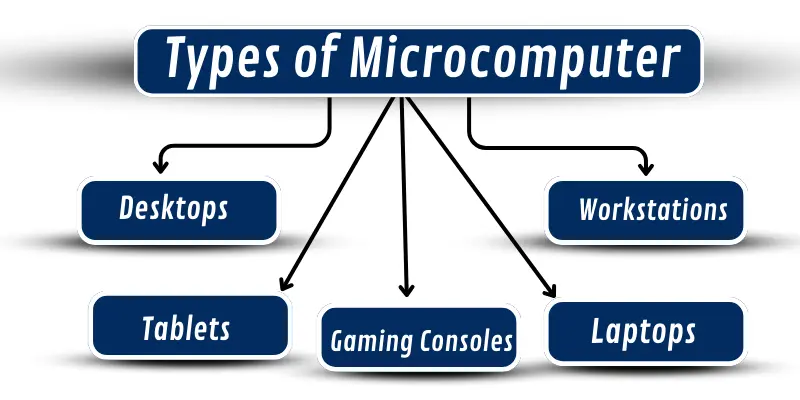
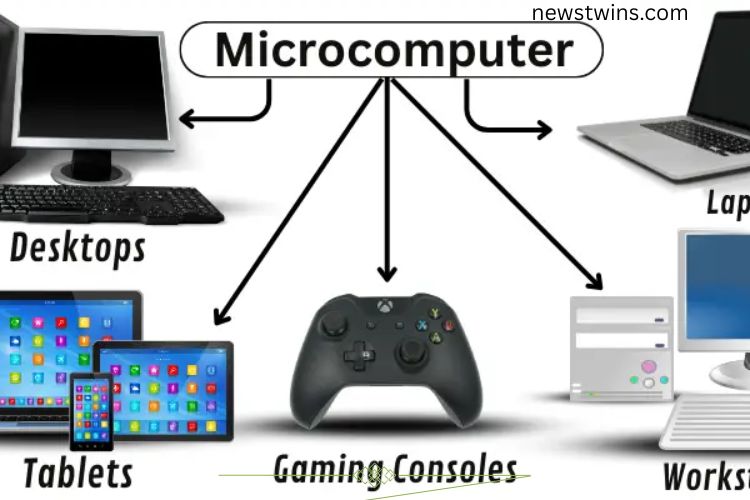
Microcomputers come in several types, each designed to meet specific needs. Here’s a breakdown of the main categories:
- Desktops: Stationary computers used primarily for work or study in one location. They offer larger screens and powerful performance.
- Laptops: Portable and lightweight devices, perfect for browsing, streaming, and mobile work.
- Tablets: Compact touch-screen devices mainly used for internet browsing, media consumption, and light productivity.
- Workstations: High-performance computers built for demanding tasks like graphic design, video editing, and engineering simulations.
- Gaming Consoles: Specialized devices, such as PlayStation and Xbox, optimized for gaming experiences.
Each type of microcomputer is tailored to specific tasks, offering flexibility for various user needs.
Essential Components of a Microcomputer
A microcomputer relies on several critical components to function efficiently:
- CPU (Central Processing Unit): Acts as the brain, controlling all operations.
- RAM (Random Access Memory): Provides temporary memory to help the system run multiple applications smoothly.
- Storage Devices: Save data and files, including SSDs and hard drives.
- Input Devices: Tools like keyboards and mice that allow users to interact with the computer.
- Output Devices: Devices such as monitors and speakers that display or play the results of computer processes.
Understanding these components helps users appreciate how microcomputers perform everyday tasks efficiently.
Applications of Microcomputers
Microcomputers are versatile and support a wide range of activities, from work to entertainment. Their practical applications include:
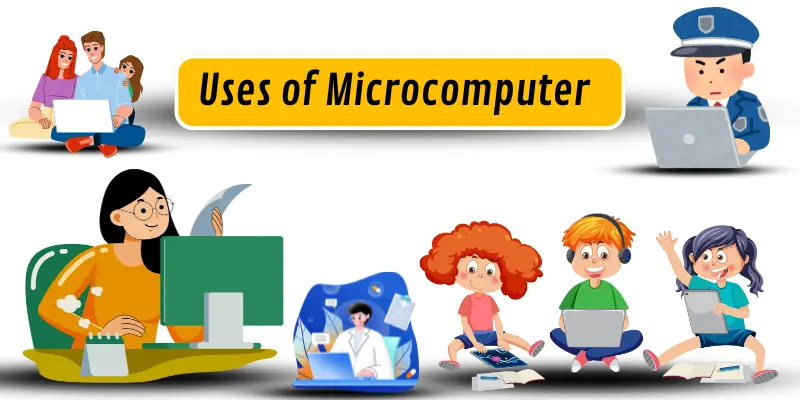
- Education: Students use microcomputers for online learning, research, and assignments.
- Office Work: Creating documents, spreadsheets, presentations, and managing data is simplified.
- Gaming: High-performance microcomputers provide immersive gaming experiences.
- Internet Browsing: Surfing the web, checking emails, and accessing cloud services.
- Graphic Design: Artists and designers rely on microcomputers for digital art and creative projects.
- Programming: Developers write, test, and run software applications.
- Data Storage: Files, documents, and multimedia can be efficiently stored and organized.
- Communication: Video calls, online meetings, and messaging are made possible.
- Multimedia Consumption: Watching videos, listening to music, and streaming content.
- Home Automation: Microcomputers can control smart devices, making homes more connected and efficient.
Their adaptability makes microcomputers an essential tool in almost every sector of modern life.
Advantages of Microcomputers
Microcomputers offer a variety of benefits that make them a preferred choice for personal and professional use:
- Affordable and cost-effective.
- Portable and easy to carry.
- Compact and space-saving design.
- User-friendly and easy to operate.
- Capable of handling multiple tasks simultaneously.
- Access to a wide range of software applications.
- Energy-efficient and low power consumption.
- Internet connectivity for online tasks and communication.
- Compatible with other devices for enhanced productivity.
These advantages highlight why microcomputers are central to personal, educational, and professional environments.
Disadvantages of Microcomputers
Despite their benefits, microcomputers have some limitations:
- Limited performance for high-demand tasks.
- Finite storage capacity for files and applications.
- Vulnerable to malware and viruses.
- Not ideal for heavy-duty computing tasks.
- Regular software and system updates required.
- Limited memory for complex applications.
- Risk of overheating during extended use.
- Hardware can be fragile and prone to damage.
- Battery life may be short on portable devices.
- Repairs can be difficult and costly.
Understanding these drawbacks helps users make informed decisions about choosing and maintaining microcomputers.
The Future of Microcomputers
Microcomputers continue to evolve with technology. Modern devices are becoming increasingly powerful while remaining compact and energy-efficient. Innovations such as cloud computing, AI integration, and ultra-portable designs promise to make microcomputers even more versatile and essential.
As technology progresses, microcomputers will continue to empower students, professionals, gamers, and creators, enhancing productivity, creativity, and entertainment worldwide. Their adaptability ensures they remain a cornerstone of modern life, bridging the gap between work, learning, and leisure.
Frequently Asked Questions:
What is a microcomputer?
A microcomputer is a small, affordable computer designed for personal use. It includes devices like desktops, laptops, and tablets, and is powered by a central microprocessor.
How are microcomputers different from mainframes or minicomputers?
Microcomputers are compact, cost-effective, and meant for individual use, while mainframes and minicomputers are larger, more expensive, and designed for multiple users or complex tasks.
What are the main types of microcomputers?
The primary types include desktops, laptops, tablets, workstations, and gaming consoles. Each type serves different needs, from general computing to high-performance tasks.
What components make up a microcomputer?
Key components include the CPU (central processing unit), RAM (memory), storage devices, input devices like keyboards and mice, and output devices such as monitors and speakers.
What are the common uses of microcomputers?
Microcomputers are used in education, office work, gaming, internet browsing, programming, graphic design, multimedia consumption, communication, and home automation.
What are the advantages of using microcomputers?
They are affordable, portable, easy to use, energy-efficient, versatile, and capable of multitasking and internet connectivity.
What are the disadvantages of microcomputers?
Microcomputers may have limited processing power for heavy tasks, lower storage and memory, vulnerability to viruses, shorter battery life (for portable devices), and can overheat or break easily.
Conclusion
Microcomputers are small yet powerful devices that have transformed the way we live, learn, and work. From the earliest Intel 4004 chip to today’s laptops, desktops, and tablets, these devices combine affordability, portability, and versatility to meet the needs of students, professionals, gamers, and creators alike. While they have certain limitations, their advantages—such as multitasking, ease of use, and internet connectivity—make them indispensable in modern life.