


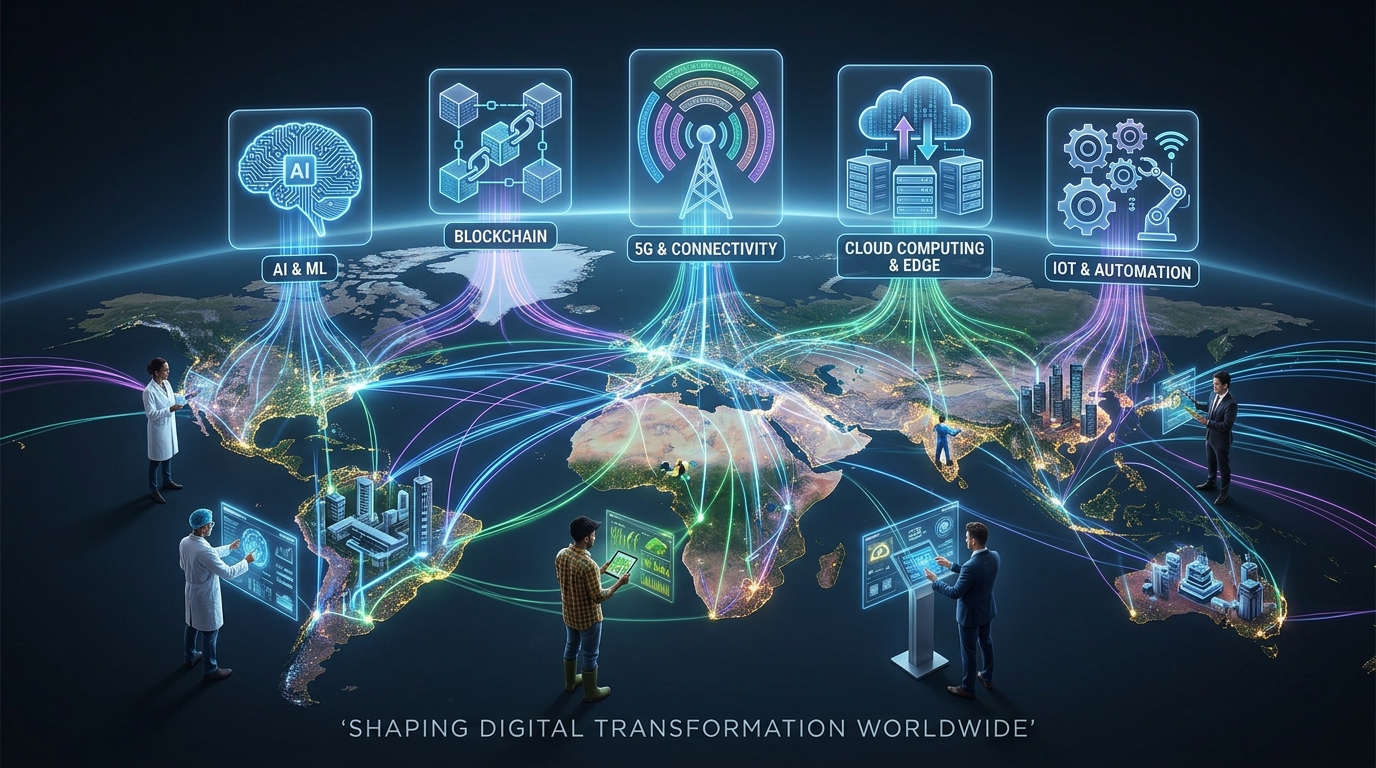
Technology innovations are driving a massive wave of digital transformation worldwide, changing how businesses operate, how governments function, and how individuals interact with the digital world. From artificial intelligence and cloud computing to blockchain and 5G connectivity, modern technologies are creating faster, smarter, and more connected systems. This transformation is not limited to one industry; it is reshaping healthcare, finance, education, manufacturing, and communication on a global scale, making digital adoption essential for growth and competitiveness.
Artificial Intelligence And Machine Learning Growth
Intelligent Automation Systems
AI-powered automation is replacing repetitive manual tasks across industries, improving speed and accuracy. Businesses use intelligent systems for data processing, customer support, and decision-making, which reduces costs and enhances productivity significantly.
Predictive Analytics Expansion
Machine learning models analyze large datasets to predict trends, customer behavior, and market changes. This helps organizations make proactive decisions and reduce risks in competitive environments.
Natural Language Processing Tools
NLP enables machines to understand and respond to human language effectively. It powers chatbots, translation tools, and voice assistants, improving communication and user experience globally.
Computer Vision Applications
Computer vision allows machines to interpret images and videos for security, healthcare, and manufacturing. It improves automation and enhances accuracy in visual-based tasks.
AI Driven Personalization Systems
AI customizes digital experiences based on user preferences and behavior. This increases engagement in e-commerce, entertainment, and online services.
| AI Technology | Key Benefit | Industry Impact |
|---|---|---|
| Automation | Efficiency | Cost reduction |
| NLP | Communication | User interaction |
| Vision AI | Accuracy | Security & healthcare |
Cloud Computing And Digital Infrastructure
Scalable Cloud Platforms
Cloud computing enables businesses to store and manage data remotely with scalable infrastructure. It reduces hardware costs and improves flexibility.
Hybrid Cloud Solutions
Hybrid systems combine private and public cloud environments for better security and performance. They are widely used in enterprise-level organizations.
Data Storage Optimization
Cloud storage allows secure and efficient management of large datasets. It improves accessibility and disaster recovery capabilities.
Cloud Security Enhancements
Advanced encryption and security protocols protect sensitive data in cloud environments. This builds trust in digital systems.
Remote Collaboration Systems
Cloud tools enable real-time collaboration between global teams. This improves productivity and communication efficiency.
Internet Of Things (IoT) Revolution
Smart Device Connectivity
IoT connects everyday devices like phones, appliances, and sensors to the internet. This enables automation and remote control.
Smart Home Ecosystems
IoT-powered homes allow users to control lighting, security, and appliances remotely. This improves convenience and energy efficiency.
Industrial IoT Systems
Factories use IoT sensors to monitor machines and improve production efficiency. This reduces downtime and operational costs.
Healthcare IoT Devices
Wearable devices track health metrics in real time. This improves patient monitoring and preventive care.
Smart City Infrastructure
IoT supports traffic management, waste control, and energy optimization in smart cities. It improves urban living standards.
Blockchain And Decentralized Technologies
Secure Transaction Systems
Blockchain ensures secure and transparent digital transactions. It reduces fraud and increases trust in financial systems.
Smart Contract Automation
Smart contracts execute agreements automatically when conditions are met. This eliminates intermediaries and improves efficiency.
Digital Identity Management
Blockchain provides secure digital identity verification systems. This enhances privacy and security online.
Supply Chain Transparency
Blockchain tracks products from origin to destination, ensuring authenticity and accountability in global trade.
Decentralized Finance Platforms
DeFi systems enable financial services without traditional banks. This increases accessibility and financial inclusion.
5G And Advanced Connectivity
Ultra Fast Internet Speeds
5G technology delivers significantly faster internet, improving streaming, gaming, and communication experiences.
Low Latency Communication
Reduced delay in data transfer enables real-time applications like remote surgery and autonomous driving.
Enhanced Mobile Experiences
5G improves smartphone performance and supports advanced applications like AR and VR.
Smart Network Expansion
It enables large-scale IoT connectivity, supporting smart cities and industries.
Global Digital Inclusion
5G expands internet access in remote areas, bridging the digital divide.
Cybersecurity And Digital Protection
Advanced Threat Detection
AI-powered cybersecurity systems detect threats in real time, protecting digital infrastructure.
Data Encryption Technologies
Encryption secures sensitive data during storage and transmission, ensuring privacy.
Identity Verification Systems
Biometric and digital authentication systems improve security and prevent fraud.
Network Security Monitoring
Continuous monitoring helps detect and prevent cyberattacks across systems.
Cyber Awareness Training
Organizations train users to recognize and avoid digital threats, improving overall security.
Future Of Digital Transformation
Hyper Automation Systems
Future systems will combine AI, robotics, and analytics to fully automate business processes.
Metaverse Integration Growth
Digital and virtual environments will merge, creating immersive business and social experiences.
Quantum Computing Development
Quantum technology will solve complex problems faster than traditional computers.
Sustainable Digital Solutions
Green technology will reduce energy consumption in digital infrastructure.
Human AI Collaboration Models
Humans and AI will work together to enhance productivity and innovation globally.
What is digital transformation?
Digital transformation is the integration of digital technologies into all areas of business and society to improve efficiency and value.
Which technologies drive digital transformation?
AI, cloud computing, IoT, blockchain, and 5G are key drivers.
How does AI support digital innovation?
AI improves automation, decision-making, and personalization.
Why is cybersecurity important in digital transformation?
It protects data, systems, and digital infrastructure from threats.
What is the future of digital transformation?
It will focus on automation, connectivity, and human-AI collaboration.
Technology innovations are reshaping global digital transformation by creating smarter, faster, and more connected systems across all industries. From AI and cloud computing to blockchain and 5G, these advancements are enabling businesses and societies to operate more efficiently and securely. As innovation continues, the world will move toward a fully integrated digital ecosystem driven by automation, intelligence, and global connectivity.
