


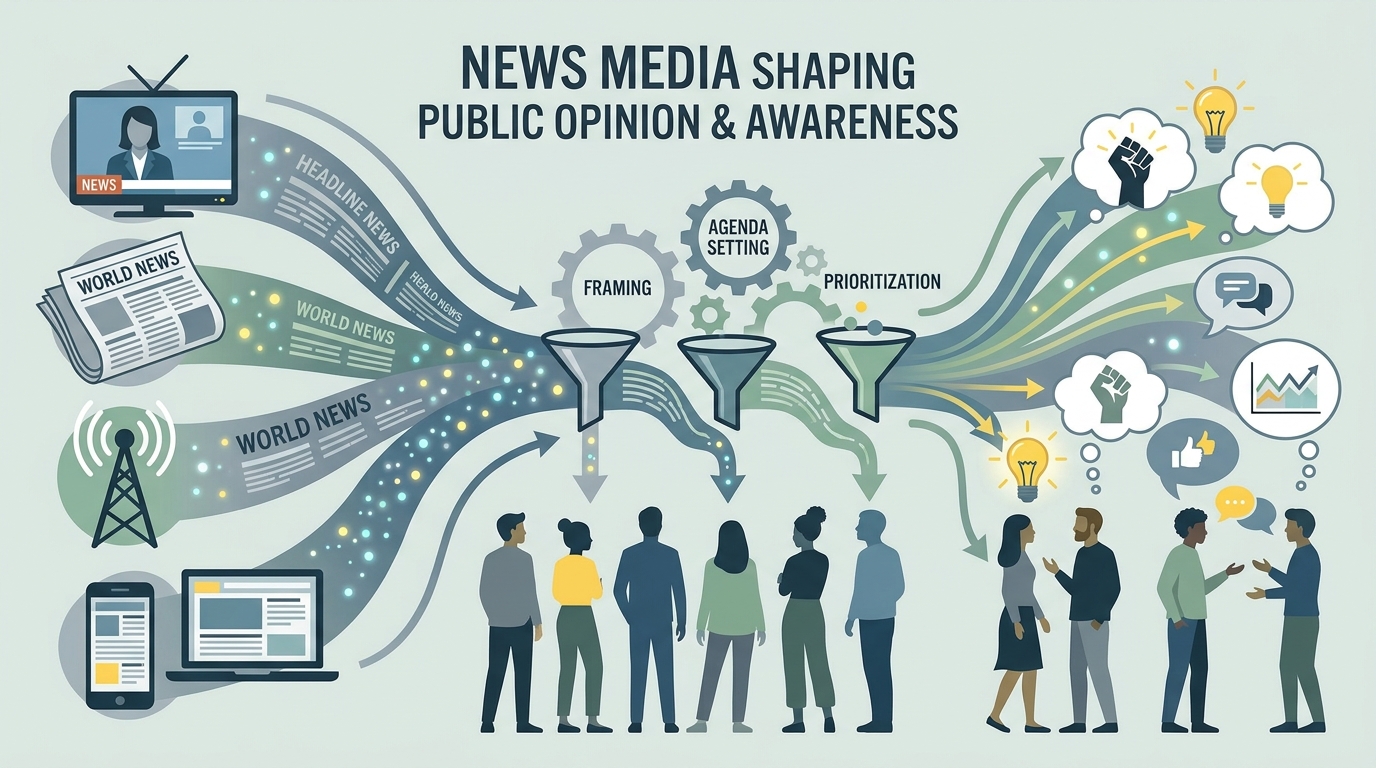
News media plays a powerful role in shaping public opinion and increasing awareness about social, political, economic, and global issues. Through television, newspapers, radio, and digital platforms, media informs people about current events and influences how they understand the world. In modern society, news media has become one of the most important tools for communication, education, and public engagement.
Role of News Media in Society
Providing Information to the Public
News media delivers important information about local and global events, helping citizens stay informed about developments that affect their lives. Accurate reporting supports public awareness and encourages informed decision-making in society.
Educating Communities
Media educates people about political systems, social issues, health concerns, and economic changes. Informative reporting helps individuals understand complex topics more clearly and promotes social understanding across communities.
Promoting Democratic Participation
A free and active news media encourages citizens to participate in democratic processes such as voting and public discussions. It helps people evaluate leaders, policies, and government performance effectively.
Acting as a Watchdog
News organizations monitor governments, corporations, and institutions to expose corruption, abuse of power, and unethical practices. This watchdog role supports accountability and transparency in society.
Encouraging Public Debate
Media platforms create spaces for discussions and debates on important issues. These conversations help shape public opinion and encourage civic engagement among citizens.
Influence on Public Opinion
Framing Public Perception
The way news stories are presented influences how audiences interpret events and issues. Headlines, language, and visuals shape public understanding and emotional responses significantly.
Agenda Setting by Media
News media determines which issues receive public attention by deciding what stories to cover prominently. This influences what people consider important in society and politics.
Emotional Impact of Reporting
Emotional storytelling in news coverage can strongly influence audience reactions and attitudes. Human-centered stories often create empathy and deeper public engagement with issues.
Influence Through Repetition
Repeated exposure to certain topics or viewpoints can reinforce beliefs and shape long-term public opinion. Frequent media coverage increases awareness and attention toward specific issues.
Social Media Amplification
Platforms like Facebook and X amplify news content quickly, spreading information and opinions to global audiences in real time.
Digital Transformation of News Media
Rise of Online Journalism
Digital platforms have transformed journalism by making news accessible instantly through websites, apps, and online publications. Audiences can now consume information anytime and anywhere.
Mobile News Consumption
Smartphones have changed how people access news. Mobile-friendly platforms allow users to receive updates quickly, increasing engagement and accessibility.
Real-Time News Updates
Digital media provides live updates on breaking events, enabling audiences to stay informed as situations develop around the world.
Multimedia Storytelling
Modern journalism combines text, videos, podcasts, and graphics to create more engaging and informative news experiences for audiences.
Growth of Independent Media
Online platforms have allowed independent journalists and creators to reach audiences directly without traditional media organizations.
Challenges Facing Modern News Media
Spread of Misinformation
False information spreads rapidly online, making it difficult for audiences to distinguish between credible news and misleading content.
Bias in Reporting
Some media outlets may present news with political or ideological bias, influencing public perception unfairly and reducing trust.
Declining Public Trust
Public confidence in media organizations has declined in some regions due to concerns about accuracy, bias, and sensationalism.
Financial Pressures
Traditional media organizations face financial challenges as advertising revenue shifts toward digital platforms and social media companies.
Information Overload
The constant flow of news can overwhelm audiences, making it harder to focus on important issues and verify information sources.
News Media and Politics
Election Coverage Influence
Media coverage significantly impacts election campaigns by shaping candidate visibility and public perception of political issues.
Political Debate Broadcasting
News platforms broadcast debates and discussions, helping voters compare political leaders and policies before elections.
Investigative Political Journalism
Investigative journalism uncovers corruption, scandals, and misuse of power, influencing political accountability and reforms.
Public Policy Awareness
Media explains government policies and decisions, helping citizens understand their impact on society and daily life.
International Political Reporting
Global political coverage informs audiences about conflicts, diplomacy, and international relations affecting world stability.
Social Impact of News Media
Raising Social Awareness
Media highlights important social issues such as poverty, education, climate change, and healthcare, encouraging public action and awareness.
Influencing Cultural Trends
News and entertainment media influence cultural values, behaviors, and public discussions across societies worldwide.
Disaster and Crisis Communication
Media plays a vital role during emergencies by providing updates, safety instructions, and support information to the public.
Encouraging Social Movements
News coverage can support social movements by increasing visibility and public engagement around causes and activism.
Community Connection Building
Local news media strengthens community identity by covering regional events, issues, and achievements important to residents.
Future of News Media
Artificial Intelligence in Journalism
AI tools are increasingly used for content creation, data analysis, and personalized news recommendations in digital journalism.
Personalized News Experiences
Future news platforms will deliver customized content based on user interests and reading behavior.
Expansion of Citizen Journalism
Ordinary individuals will continue contributing to news reporting through smartphones and social media platforms.
Interactive Media Technologies
Virtual reality and immersive storytelling will create more engaging and realistic news experiences for audiences.
Stronger Fact-Checking Systems
Media organizations will invest more in fact-checking technologies to combat misinformation and maintain credibility.
Conclusion
News media plays a critical role in shaping public opinion, spreading awareness, and supporting democratic societies. Through traditional and digital platforms, it informs citizens, influences discussions, and holds powerful institutions accountable. As technology evolves, the media landscape will continue changing, making media literacy and responsible journalism increasingly important for informed and engaged communities worldwide.
