


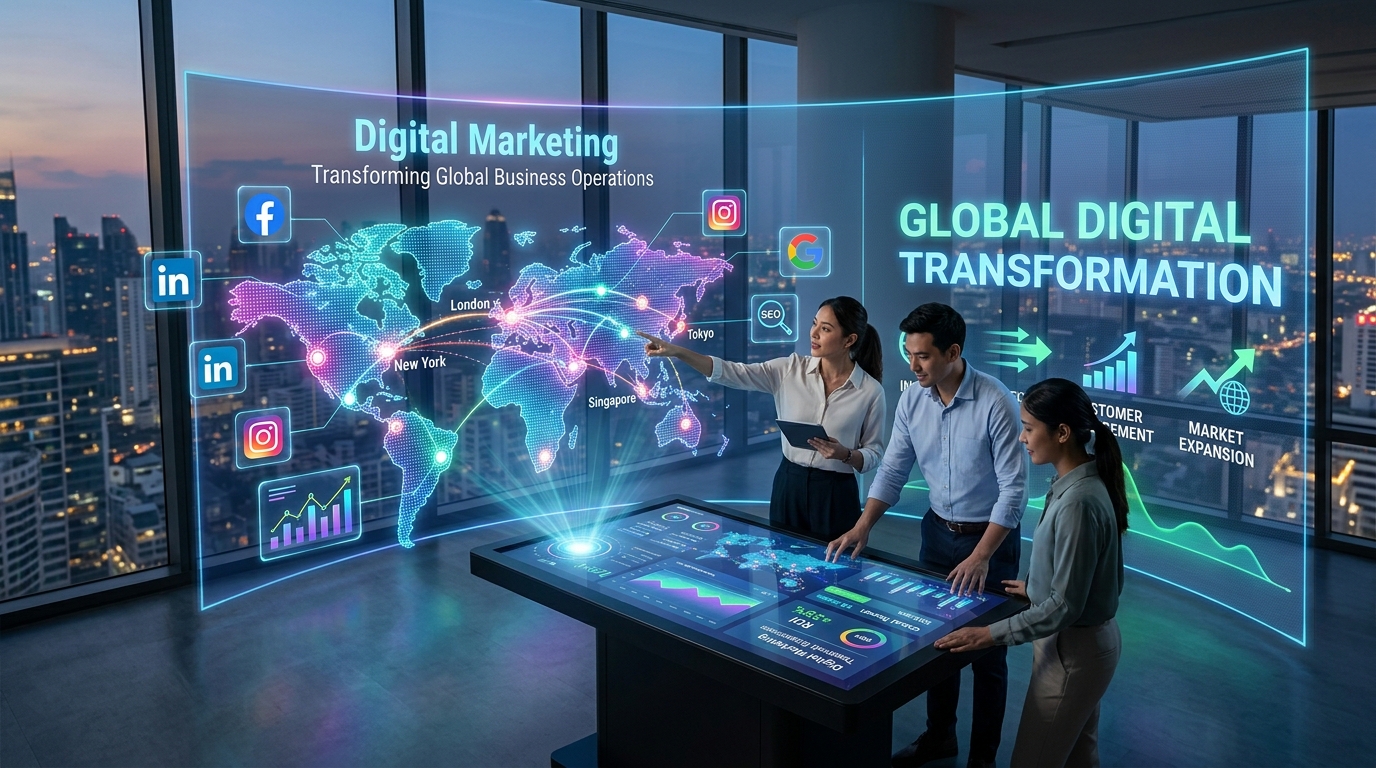
Digital marketing has become a driving force behind modern business operations across the globe. It has changed how companies attract customers, build brands, and generate revenue. Unlike traditional marketing, digital strategies use online platforms, data analytics, and real-time engagement to reach audiences more effectively, making it essential for businesses in today’s competitive global economy.
Evolution of Digital Marketing
Shift from Traditional to Digital Platforms
Businesses have moved from print, radio, and television advertising to online platforms like websites and social media. This shift allows companies to reach larger audiences at lower costs while measuring performance more accurately.
Rise of Social Media Marketing
Social media platforms have become powerful marketing tools for businesses. They allow brands to interact directly with customers, build communities, and promote products globally in real time.
Growth of Search Engine Marketing
Search engines play a key role in helping customers find products and services. Businesses optimize their visibility through paid ads and organic strategies to increase traffic and conversions.
Mobile Marketing Expansion
With the rise of smartphones, mobile marketing has become essential. Businesses now target users through apps, SMS campaigns, and mobile-friendly websites to improve engagement.
Data-Driven Marketing Evolution
Modern marketing relies heavily on data analytics to understand customer behavior. This helps businesses create targeted campaigns that improve efficiency and return on investment.
Core Digital Marketing Strategies
Search Engine Optimization Techniques
SEO helps businesses improve their ranking on search engines. By optimizing content, keywords, and website structure, companies increase organic traffic and visibility.
Pay-Per-Click Advertising
PPC advertising allows businesses to display ads and pay only when users click. This provides fast visibility and measurable results for marketing campaigns.
Content Marketing Approach
Content marketing focuses on creating valuable and relevant content to attract and engage audiences. It builds trust and long-term customer relationships.
Email Marketing Campaigns
Email marketing remains a powerful tool for direct communication. Businesses use personalized emails to promote offers, share updates, and nurture customer relationships.
Influencer Marketing Growth
Brands collaborate with influencers to promote products authentically. Influencers help businesses reach niche audiences and improve brand credibility.
Impact on Business Operations
Increased Global Reach
Digital marketing allows businesses to reach international audiences without physical boundaries. This expands market opportunities and customer bases globally.
Improved Customer Engagement
Businesses can interact with customers instantly through social media, chat systems, and email, improving satisfaction and loyalty.
Real-Time Performance Tracking
Marketing campaigns can be monitored in real time using analytics tools. This helps businesses adjust strategies quickly for better results.
Cost-Effective Marketing Solutions
Compared to traditional advertising, digital marketing is more affordable and offers higher returns, making it accessible to small and large businesses alike.
Enhanced Brand Visibility
Consistent online presence improves brand recognition and trust, helping businesses stand out in competitive markets.
Role of Technology in Digital Marketing
Artificial Intelligence Integration
AI tools help businesses analyze data, predict trends, and automate marketing tasks for better efficiency and targeting.
Automation Tools Usage
Marketing automation platforms streamline tasks like email campaigns, scheduling, and customer segmentation, saving time and effort.
Big Data Analytics
Big data helps businesses understand customer behavior and preferences, enabling more precise marketing strategies.
Cloud-Based Marketing Systems
Cloud platforms allow businesses to manage campaigns and data securely from anywhere, improving flexibility and collaboration.
Machine Learning Applications
Machine learning improves ad targeting and personalization by learning from user behavior and improving campaign performance over time.
Social Media and Brand Transformation
Platform-Based Branding
Platforms like Facebook and Instagram help businesses build strong brand identities and reach diverse audiences.
Viral Content Strategies
Creative and engaging content can go viral, significantly increasing brand exposure and customer engagement.
Customer Interaction Channels
Social media enables direct communication between brands and customers, improving trust and loyalty.
Reputation Management Online
Businesses monitor online reviews and feedback to manage brand reputation and respond to customer concerns quickly.
Community Building Efforts
Brands create online communities to engage customers and build long-term relationships with their audience.
Challenges in Digital Marketing
High Competition Levels
The digital space is highly competitive, making it difficult for businesses to stand out without strong strategies.
Changing Algorithms
Search engines and social platforms frequently update algorithms, affecting visibility and marketing performance.
Data Privacy Concerns
Businesses must handle customer data responsibly to comply with privacy laws and maintain trust.
Content Saturation Issues
The internet is filled with content, making it harder for brands to capture audience attention.
Skill Gap in Workforce
Many businesses struggle to find skilled professionals in digital marketing and analytics.
Future of Digital Marketing
AI-Powered Marketing Growth
Artificial intelligence will further automate and optimize marketing campaigns for better precision.
Personalized Customer Experiences
Future marketing will focus heavily on personalized content tailored to individual user behavior.
Voice Search Optimization
With smart assistants, voice search will become a key part of marketing strategies.
Immersive Technologies Use
Virtual reality and augmented reality will create interactive marketing experiences.
Global Digital Ecosystem Expansion
Businesses will operate in fully integrated digital ecosystems connecting multiple platforms and technologies.
Conclusion
Digital marketing has transformed global business operations by making marketing more efficient, data-driven, and customer-focused. It enables businesses to reach wider audiences, improve engagement, and increase profitability. As technology continues to evolve, digital marketing will remain a key driver of global business growth and innovation in the modern economy.
