


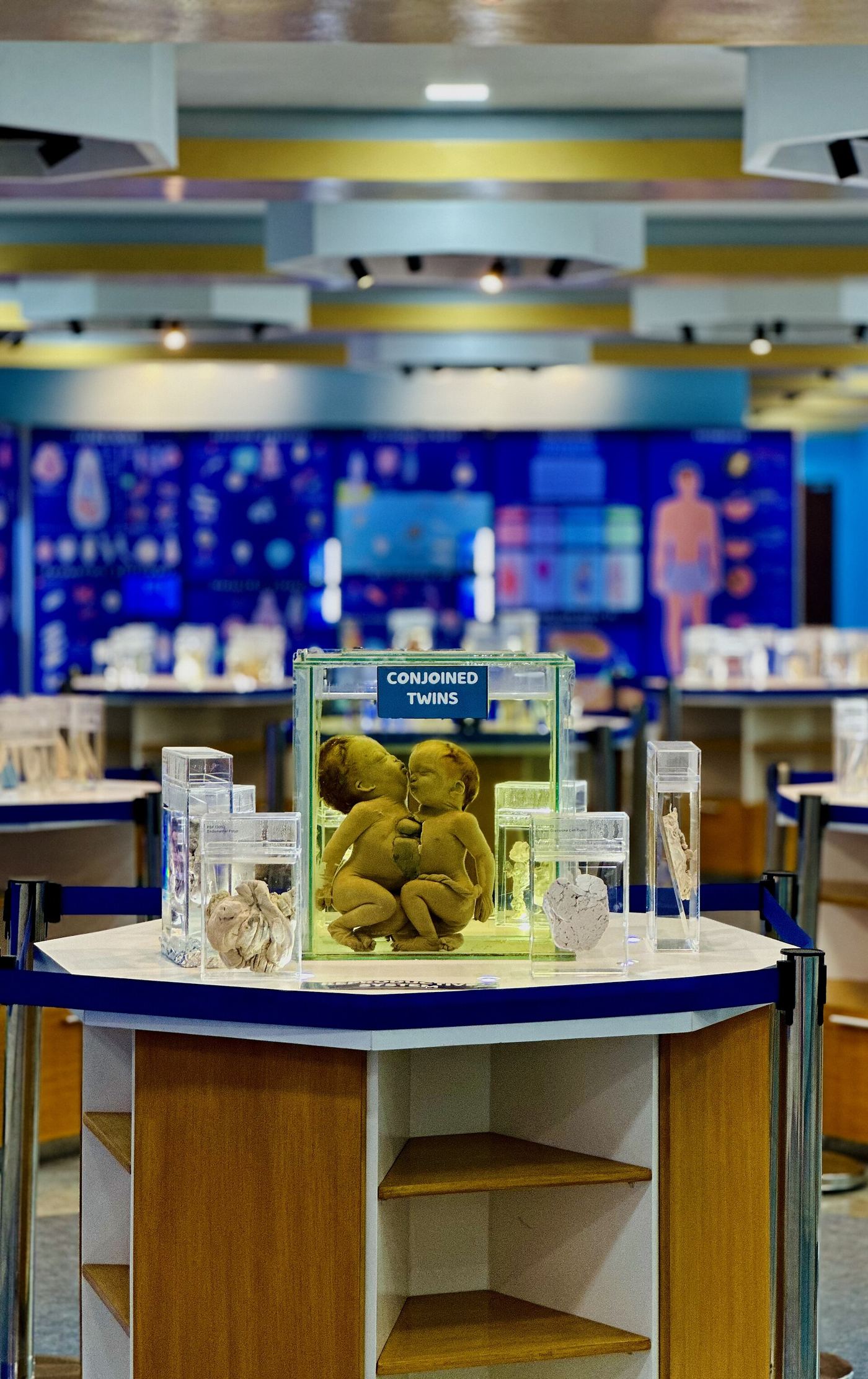
Every twin registry on Earth exists to exploit a beautiful natural design: identical twins share essentially all their DNA, fraternal twins share half like ordinary siblings, and both usually share a childhood. Compare the two kinds, and you can estimate — for almost any trait, from height to schizophrenia to sense of humour — how much of the variation is written in genes and how much in living. Twin studies built modern behavioural genetics, and in the genomic era they are being rediscovered, not retired.
The classic findings still orient the field: identical twins are consistently more alike than fraternal twins on intelligence, personality and most psychiatric conditions, implying substantial heritability almost everywhere researchers look — the famous ‘first law’ that everything is heritable. The equally famous corollary took longer to absorb: the environment that matters most is often the non-shared kind — the different friend group, the different teacher, the accident of a different bedroom — which is why siblings raised together can be so different. Our science pages return to the twin literature whenever a headline claims a gene for anything.
What Genomics Added
DNA sequencing sharpened rather than replaced the design. Polygenic scores can now be compared within identical pairs — same genes, different scores are impossible, so within-pair differences isolate pure environment with unprecedented cleanliness. Epigenetic studies of ageing twins show molecular marks diverging across a lifetime: identical genomes, increasingly different readings of them.
Twin research also disciplines the hype. When a trait’s heritability is high, it does not follow that it is fixed — myopia is highly heritable and corrected with two pieces of shaped glass. Heritability describes this population, in this environment, now — twins teach humility along with genetics.
The Volunteers Behind the Numbers
Registries run on the generosity of tens of thousands of twins who answer, scan and bleed for science across lifetimes. Major journals including Nature continue to publish twin-based work at the centre of genetics’ hardest questions — because nature, uniquely generous, ran the controlled experiment herself, twice.
There is a frontier the registries are only beginning to open: the microbiome, the metabolome and the other molecular layers where identical twins can diverge dramatically — meaning twin designs can now hunt environmental effects at resolutions the founders could not have imagined. Discordant-twin studies, where one twin has a disease the other escaped, have become precision instruments for finding causes that population statistics smear out. The twins themselves are aging into the design’s most valuable phase, as the diseases of later life arrive unevenly within pairs. Registries are recruiting accordingly, including in populations the classic studies — overwhelmingly European — neglected. A method born in Victorian curiosity, matured in Scandinavian record-keeping, is ending the genomic century where it began: with two people, alike in almost everything, teaching science what ‘almost’ contains.
