


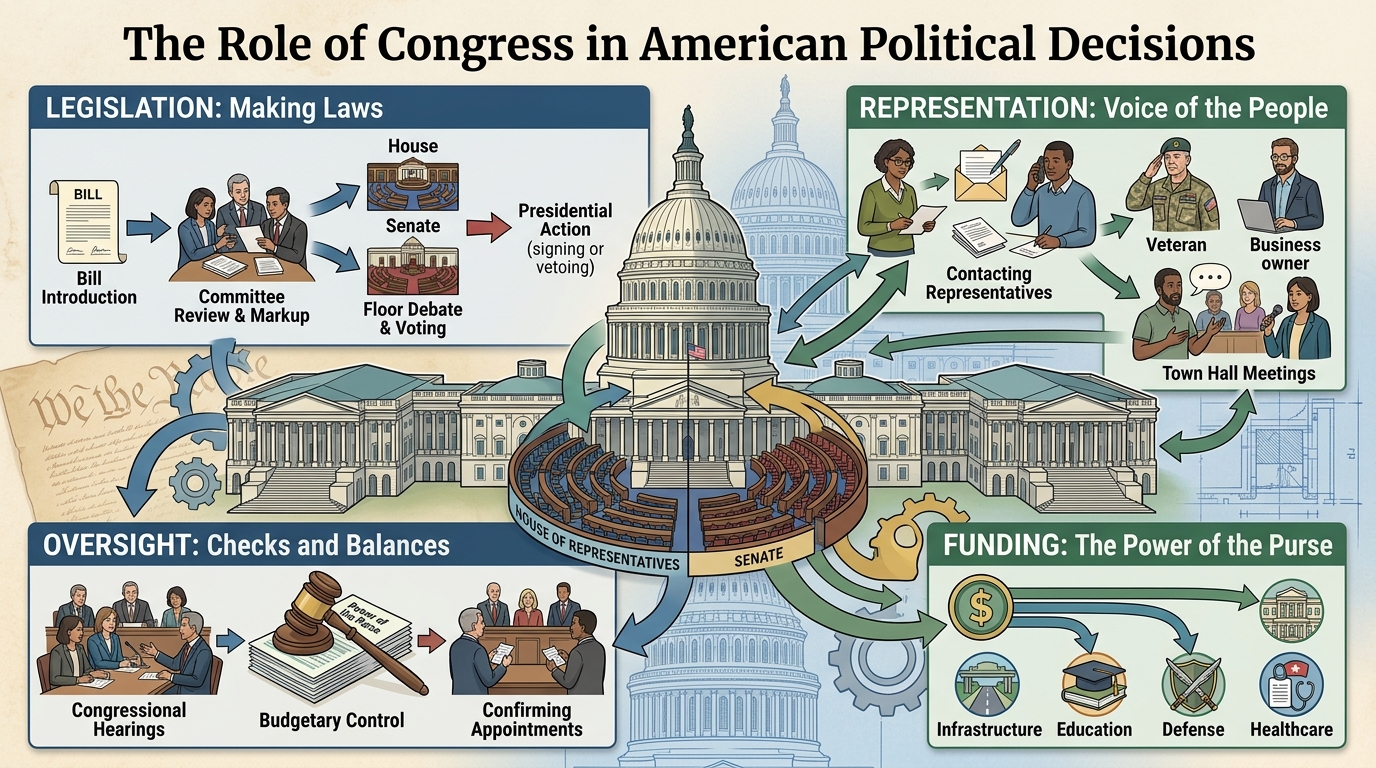
The United States political system is built on a balance of power, and one of the most important institutions in that system is the United States Congress. It plays a central role in shaping laws, controlling national spending, and representing citizens’ interests. Understanding how Congress works helps explain how American political decisions are made and why different branches of government often share or compete for authority.
Structure of Congress
Two Chamber System
Congress is divided into two chambers: the Senate and the House of Representatives. This bicameral structure ensures balanced representation, with the Senate representing states equally and the House representing population-based districts.
House of Representatives
The House of Representatives is made up of members elected based on population size. Larger states have more representatives, giving them greater influence in legislative decisions and national policy-making processes.
Senate Role
The Senate consists of two senators from each state, ensuring equal representation regardless of population. Senators serve longer terms, allowing them to focus on long-term national interests and policy stability.
Leadership Positions
Congress is led by key figures such as the Speaker of the House and the Senate Majority Leader. These leaders guide legislative priorities, manage debates, and influence the passage of bills.
Committee System
Committees are specialized groups within Congress that review legislation in detail. They play a critical role in shaping, modifying, and approving bills before they reach the full chamber for voting.
Lawmaking Process
Bill Introduction
Legislation begins when a member of Congress introduces a bill. This proposal addresses specific issues such as healthcare, taxation, or national security.
Debate and Discussion
Once introduced, bills are debated in both chambers. Lawmakers discuss advantages, concerns, and possible changes to improve the legislation before approval.
Voting Procedure
After debate, members vote on the bill. If both the House and Senate approve it, the bill moves forward in the legislative process.
Presidential Approval
The President of the United States reviews approved bills. They can sign them into law or veto them, sending them back to Congress for reconsideration.
Law Enforcement Stage
Once a bill becomes law, federal agencies are responsible for implementing and enforcing it across the country.
Financial Control and Budgeting
Federal Budget Approval
Congress controls national spending by approving the federal budget. This ensures government programs receive proper funding based on national priorities.
Taxation Laws
Congress has the power to create and modify tax laws. These laws determine how government revenue is collected from individuals and businesses.
Spending Oversight
Congress monitors government spending to ensure funds are used effectively and responsibly, reducing waste and corruption.
Debt Management Decisions
Congress also authorizes borrowing limits for the federal government, influencing national debt levels and financial stability.
Economic Policy Influence
Through budgeting and taxation, Congress directly affects economic growth, inflation control, and employment policies.
Oversight of the Executive Branch
Monitoring Government Agencies
Congress supervises federal agencies to ensure they follow laws and operate efficiently. This prevents misuse of power within the executive branch.
Investigative Hearings
Congress can hold hearings to investigate issues, scandals, or government failures, increasing transparency and accountability.
Confirmation Powers
The Senate confirms key presidential appointments, including judges, ambassadors, and cabinet members, ensuring qualified leadership.
Impeachment Authority
Congress has the power to impeach and remove federal officials, including the President, in cases of serious misconduct.
Policy Evaluation
Congress evaluates whether government programs are effective and makes adjustments to improve performance and outcomes.
Representation of the Public
Constituency Services
Members of Congress help citizens with federal issues such as immigration, social security, and government services.
Public Opinion Reflection
Congress reflects the views and needs of citizens through elections, ensuring democratic representation in decision-making.
Advocacy for States
Representatives and senators advocate for their states’ interests, including funding, infrastructure, and local development projects.
Communication with Voters
Congress members maintain communication with citizens through town halls, meetings, and digital platforms.
Addressing Social Issues
Congress addresses major social concerns such as healthcare, education, and civil rights through legislation and debate.
Foreign Policy Influence
Treaty Approval
The Senate approves international treaties negotiated by the President, ensuring shared decision-making in foreign relations.
War Powers
Congress has the authority to declare war, giving it significant influence over military actions and national defense policy.
Foreign Aid Decisions
Congress determines funding for foreign aid programs, influencing global development and diplomatic relationships.
Trade Agreements Oversight
Congress reviews and influences international trade agreements that impact the U.S. economy and global partnerships.
Sanctions and Diplomacy
Congress can impose economic sanctions and shape diplomatic strategies to respond to global conflicts and security threats.
Political Balance and Checks
Separation of Powers
Congress operates within a system of checks and balances, ensuring no branch of government becomes too powerful.
Presidential Limitations
Congress can limit presidential power through legislation, funding decisions, and oversight actions.
Judicial Interaction
Congress influences the judiciary by confirming judges and shaping the structure of federal courts.
Bipartisan Cooperation
Legislation often requires cooperation between political parties to pass major laws and policies.
Democratic Accountability
Elections ensure that Congress remains accountable to the people and responsive to public needs.
Conclusion
The United States Congress plays a crucial role in shaping political decisions through lawmaking, budgeting, oversight, and representation. It acts as a bridge between citizens and the federal government while maintaining balance with the executive and judicial branches. Understanding Congress helps explain how American democracy functions and how national policies are created and implemented effectively.
