


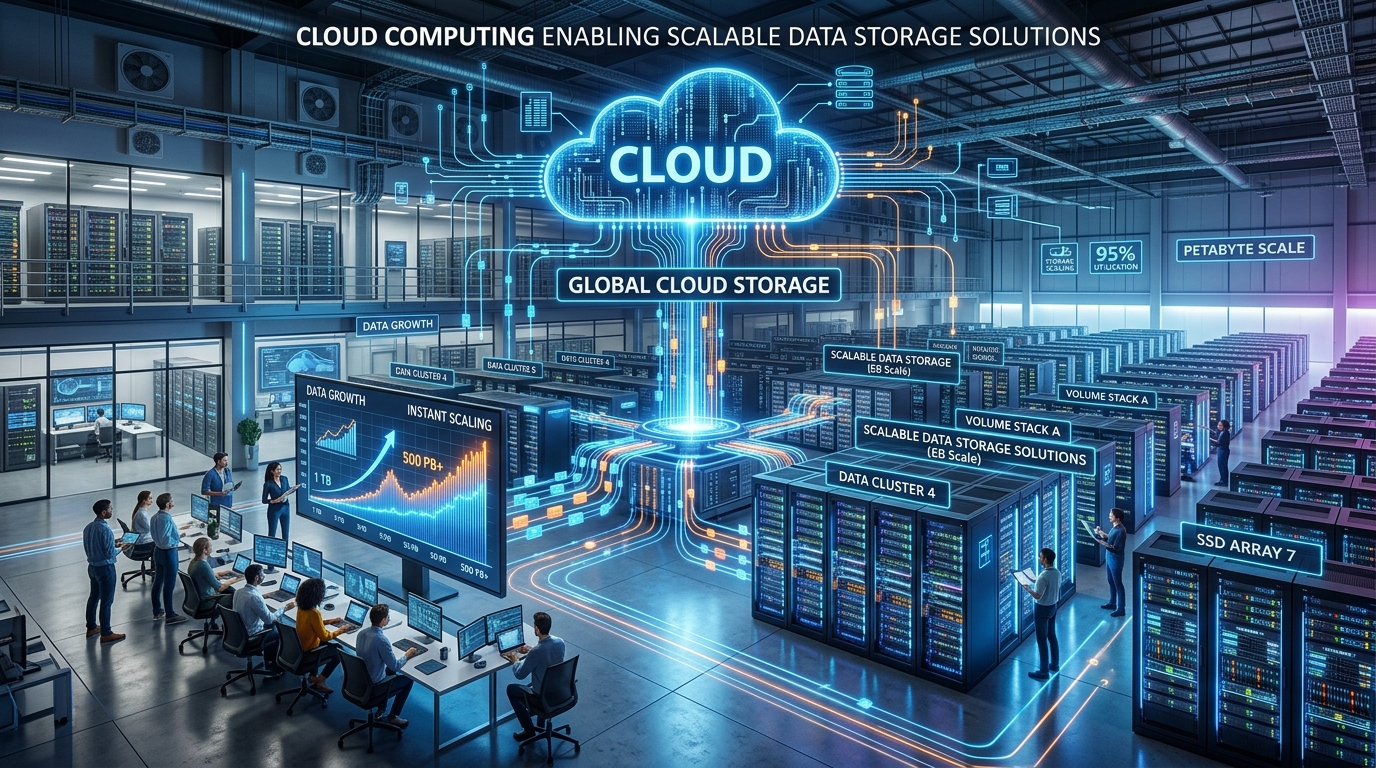
Cloud computing has transformed the way individuals and businesses store, manage, and access data. Instead of relying on physical servers or local storage devices, cloud systems offer flexible, scalable, and cost-efficient solutions that can grow with demand. This technology has become essential for modern digital infrastructure, powering everything from mobile apps to enterprise-level data platforms.
Fundamentals of Cloud Computing
Understanding Cloud Technology
Cloud computing refers to delivering computing services like storage, processing, and software over the internet. It removes the need for physical infrastructure and allows users to access data from anywhere with an internet connection.
Role of Remote Servers
Cloud systems use remote servers located in data centers to store and process information. These servers are maintained by providers, ensuring reliability, security, and high availability for users worldwide.
Internet-Based Access Model
Users access cloud services through the internet instead of local devices. This enables flexibility, remote work capabilities, and seamless data sharing across multiple platforms.
Virtualization Technology
Virtualization allows multiple virtual systems to run on a single physical server. This improves efficiency, reduces costs, and maximizes resource utilization in cloud environments.
Pay-as-You-Go Structure
Cloud services typically operate on a pay-as-you-use model. Businesses only pay for the resources they consume, making it a cost-effective solution for scaling operations.
Scalable Data Storage Solutions
On-Demand Storage Expansion
Cloud storage allows users to increase or decrease storage capacity instantly based on needs. This flexibility supports business growth without infrastructure limitations.
Distributed Data Systems
Data is stored across multiple servers in different locations, ensuring reliability and reducing the risk of data loss or system failure.
High Availability Architecture
Cloud systems are designed to remain accessible at all times. Even if one server fails, others continue to operate, ensuring uninterrupted data access.
Automated Resource Allocation
Cloud platforms automatically assign storage and computing resources based on demand, improving efficiency and performance without manual intervention.
Elastic Storage Models
Elastic storage enables systems to adjust capacity dynamically, making it ideal for businesses with fluctuating workloads and data requirements.
Types of Cloud Storage Services
Public Cloud Platforms
Public cloud services are provided by companies like Amazon Web Services and are shared among multiple users while maintaining security and isolation.
Private Cloud Systems
Private clouds are dedicated to a single organization, offering greater control, customization, and security for sensitive data storage.
Hybrid Cloud Solutions
Hybrid clouds combine public and private systems, allowing businesses to balance cost, flexibility, and security effectively.
Multi-Cloud Strategies
Multi-cloud approaches use multiple providers to avoid dependency on a single system and improve resilience and performance.
Object Storage Services
Object storage organizes data as objects rather than files or blocks, making it ideal for unstructured data like images, videos, and backups.
Benefits of Cloud-Based Storage
Cost Efficiency Advantages
Cloud storage reduces the need for expensive physical infrastructure, lowering upfront and maintenance costs for businesses.
Global Accessibility
Users can access stored data from anywhere in the world, improving collaboration and remote work efficiency.
Data Backup and Recovery
Cloud systems automatically back up data, ensuring recovery in case of accidental loss or system failure.
Enhanced Security Measures
Cloud providers implement encryption, firewalls, and monitoring tools to protect sensitive information from cyber threats.
Seamless Collaboration
Teams can share and edit files in real time, improving productivity and communication across departments.
Challenges in Cloud Storage
Data Privacy Concerns
Storing data on external servers raises concerns about privacy and control over sensitive information.
Internet Dependency
Cloud systems require a stable internet connection, which can be a limitation in areas with poor connectivity.
Security Risks
Although secure, cloud platforms can still be targeted by cyberattacks if not properly managed.
Downtime Issues
Occasional service outages can affect access to critical data and disrupt business operations.
Compliance Requirements
Organizations must follow legal regulations regarding data storage and protection in different regions.
Cloud Computing in Business Operations
Enterprise Data Management
Businesses use cloud storage to manage large volumes of data efficiently and securely.
Remote Work Enablement
Cloud platforms support remote teams by providing access to shared files and applications from anywhere.
Software Deployment
Companies deploy applications quickly using cloud infrastructure without heavy hardware investment.
Big Data Analytics
Cloud systems process large datasets for insights, helping businesses make data-driven decisions.
Disaster Recovery Solutions
Cloud backup systems ensure business continuity during unexpected failures or disasters.
Future of Cloud Storage Technology
Artificial Intelligence Integration
AI will optimize cloud storage by managing data automatically and improving efficiency.
Edge Computing Expansion
Edge computing will bring data processing closer to users, reducing latency and improving performance.
Increased Automation
Future cloud systems will require less manual management through advanced automation tools.
Sustainable Data Centers
Cloud providers are focusing on energy-efficient data centers to reduce environmental impact.
Universal Cloud Connectivity
Cloud systems will become more interconnected, enabling seamless global data exchange.
Conclusion
Cloud computing is revolutionizing data storage by providing scalable, flexible, and secure solutions for modern users. Its ability to adapt to growing demands makes it essential for businesses and individuals alike. As technology evolves, cloud systems will become even more intelligent, efficient, and integrated into everyday digital life, powering the future of global data management.
