


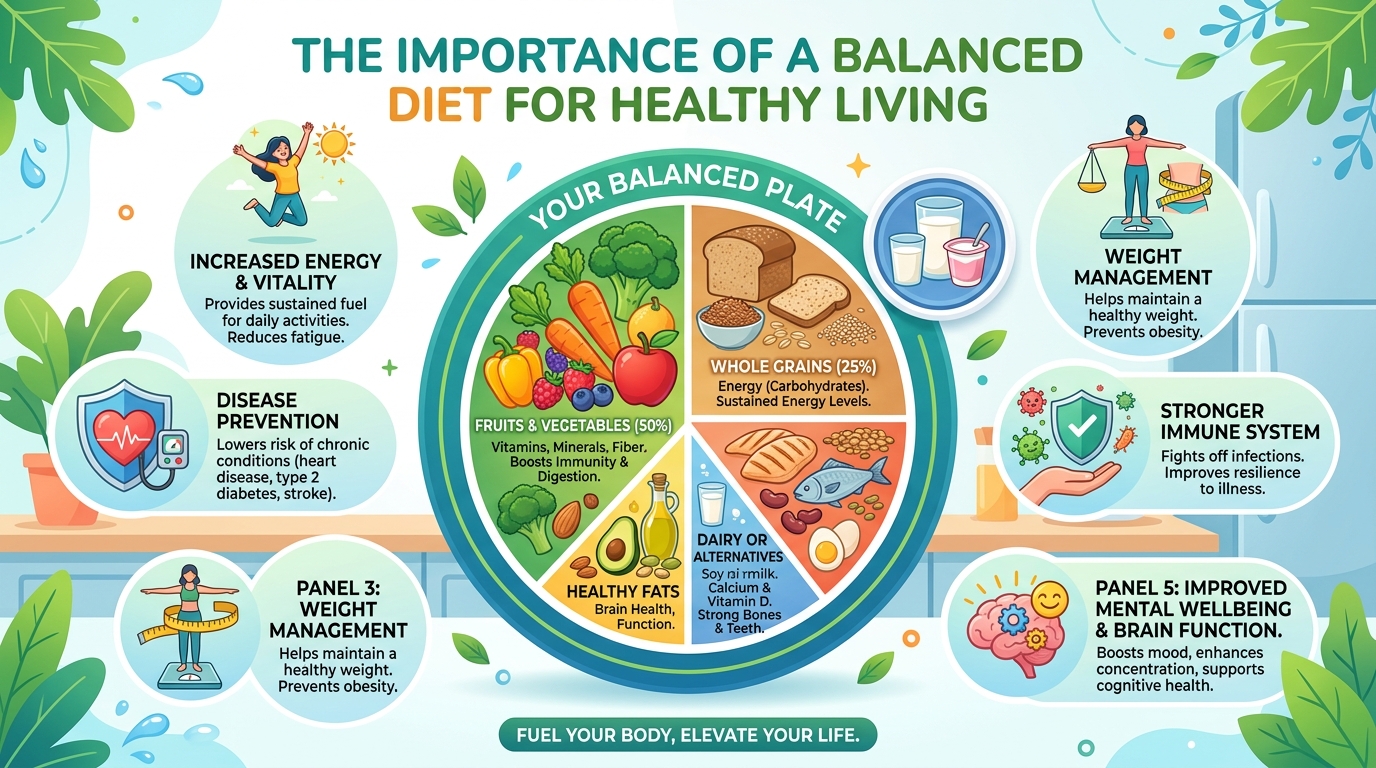
A balanced diet is one of the most important foundations of healthy living because it provides the body with essential nutrients needed for growth, energy, and overall well-being. In today’s fast-paced lifestyle, many people rely on processed or fast foods, which can lead to health issues over time. A properly balanced diet supports immunity, improves mental clarity, and helps maintain a healthy weight. It is not just about eating enough food, but about eating the right combination of nutrients that keep the body and mind functioning at their best.
Nutrient Rich Food Groups
Carbohydrates As Energy Source
Carbohydrates are the body’s primary energy source and are essential for daily activities. Whole grains, fruits, and vegetables provide complex carbohydrates that release energy slowly, keeping the body active for longer periods. They help maintain stamina and prevent fatigue throughout the day.
Protein For Body Repair
Protein is essential for building and repairing tissues, muscles, and cells. Foods like eggs, meat, beans, and dairy products support growth and recovery. Adequate protein intake strengthens the immune system and helps maintain muscle health and body structure.
Healthy Fats Importance
Healthy fats support brain function, hormone production, and energy storage. Sources like nuts, seeds, and olive oil provide essential fatty acids. These fats help maintain heart health and improve overall cognitive performance when consumed in moderation.
Vitamins For Immunity
Vitamins play a key role in boosting immunity and protecting the body from diseases. Fruits and vegetables are rich in essential vitamins like A, C, and E. They support skin health, vision, and overall body defense mechanisms.
Minerals For Body Function
Minerals such as calcium, iron, and potassium are vital for bone strength, blood circulation, and nerve function. A diet rich in leafy greens, dairy, and nuts ensures proper mineral balance in the body.
| Nutrient Type | Main Function | Health Benefit |
|---|---|---|
| Carbohydrates | Energy supply | Daily stamina |
| Proteins | Body repair | Muscle growth |
| Vitamins | Immunity boost | Disease prevention |
Health Benefits Of Balanced Diet
Strong Immune System
A balanced diet strengthens the immune system, helping the body fight infections and diseases. Nutrient-rich foods improve resistance and speed up recovery from illnesses.
Better Energy Levels
Eating a proper diet ensures steady energy throughout the day. It prevents sudden energy crashes and keeps the body active and productive.
Improved Mental Health
Healthy food improves brain function and reduces stress and anxiety. Proper nutrition supports emotional balance and mental clarity.
Weight Management Support
A balanced diet helps maintain a healthy weight by controlling calorie intake and preventing overeating. It supports long-term fitness goals.
Reduced Disease Risk
Proper nutrition lowers the risk of chronic diseases such as diabetes, heart disease, and obesity. It promotes long-term health stability.
Role Of Hydration In Diet
Water For Digestion
Water helps break down food and supports smooth digestion. It prevents constipation and improves nutrient absorption.
Temperature Regulation
Hydration helps regulate body temperature and prevents overheating. It is essential for physical activity and daily comfort.
Detoxification Process
Water removes toxins from the body through urine and sweat. It keeps organs functioning efficiently.
Skin Health Improvement
Proper hydration keeps skin healthy, glowing, and hydrated. It reduces dryness and improves appearance.
Joint Lubrication Support
Water helps lubricate joints and reduces friction, improving mobility and reducing pain.
Importance Of Meal Planning
Portion Control Awareness
Meal planning helps control portion sizes and prevents overeating. It supports balanced calorie intake.
Nutrient Balance Maintenance
Proper planning ensures all nutrients are included in daily meals. It avoids nutritional deficiencies.
Healthy Food Choices
Planning meals encourages healthier food selection and reduces junk food consumption.
Time Management Efficiency
Meal preparation saves time and reduces stress during busy routines. It supports consistency.
Budget Friendly Eating
Planning meals helps manage food expenses effectively while maintaining nutrition quality.
Balanced Diet And Lifestyle
Physical Activity Support
A balanced diet provides energy needed for exercise and physical activities. It improves performance.
Stress Reduction Effects
Healthy eating reduces stress levels and supports emotional stability. It improves mood naturally.
Sleep Quality Improvement
Proper nutrition helps regulate sleep cycles and improves rest quality. It supports recovery.
Productivity Enhancement
Good nutrition improves focus, concentration, and productivity in daily tasks and work.
Long Term Health Stability
Consistent healthy eating ensures long-term wellness and reduces future health risks.
Common Diet Mistakes To Avoid
Excess Junk Food Intake
Eating too much junk food leads to obesity and health problems. It lacks essential nutrients.
Skipping Meals Regularly
Skipping meals affects metabolism and energy levels. It can lead to overeating later.
Overconsumption Of Sugar
Too much sugar increases the risk of diabetes and weight gain. It should be controlled.
Lack Of Variety In Diet
Eating the same foods reduces nutrient intake. A varied diet ensures balanced nutrition.
Ignoring Portion Sizes
Large portions lead to excessive calorie intake. Portion control is important for health.
Balanced Diet For All Ages
Nutrition For Children
Children need nutrients for growth, brain development, and strong immunity. A balanced diet supports healthy development.
Diet For Adults
Adults require energy and nutrients for work and daily responsibilities. Balanced meals maintain productivity.
Elderly Nutrition Needs
Older adults need nutrient-rich foods for bone health and immunity support. Proper diet improves aging quality.
Pregnancy Nutrition Importance
Pregnant women need extra nutrients for fetal development and maternal health. Balanced diet is essential.
Athlete Dietary Requirements
Athletes need high protein and energy-rich foods for performance and recovery. Nutrition supports strength.
Why is a balanced diet important?
It provides essential nutrients for energy, growth, and overall health.
What happens if diet is not balanced?
It can lead to fatigue, illness, and nutritional deficiencies.
How does diet affect mental health?
Healthy food improves brain function and reduces stress.
Can a balanced diet help in weight control?
Yes, it helps maintain a healthy weight through proper nutrition.
What foods are included in a balanced diet?
Fruits, vegetables, proteins, grains, and healthy fats.
A balanced diet is essential for maintaining a healthy and active lifestyle. It supports physical strength, mental clarity, and emotional well-being. When individuals choose nutritious foods and avoid unhealthy habits, they improve their quality of life significantly. A consistent balanced diet not only prevents diseases but also ensures long-term happiness, energy, and overall wellness.
