


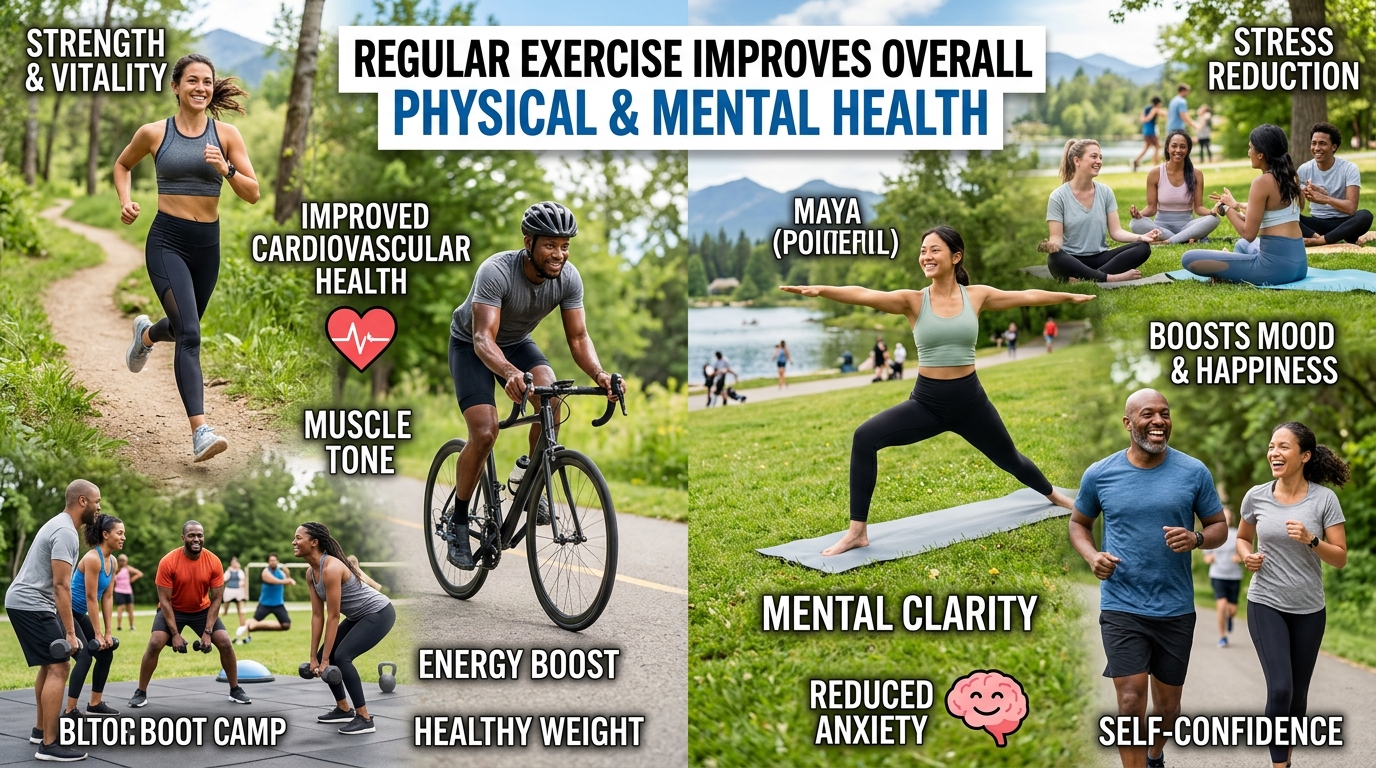
Regular exercise is one of the most effective habits for improving both physical and mental health because it strengthens the body, supports brain function, and enhances emotional balance. In today’s fast-paced lifestyle, many health issues are linked to inactivity, stress, and poor routines. Physical activity helps counter these problems by boosting energy levels, improving mood, and reducing the risk of chronic diseases, making it essential for long-term well-being.
Physical Strength and Body Fitness
Muscle Strength Development
Regular exercise helps build and maintain strong muscles by increasing resistance and physical activity levels. Strong muscles improve posture, balance, and daily movement efficiency. This reduces the risk of injuries and supports long-term physical independence, especially as the body ages.
Bone Health Improvement
Exercise strengthens bones by increasing bone density and reducing the risk of conditions like osteoporosis. Weight-bearing activities such as walking and strength training help maintain skeletal health and improve overall structural support in the body.
Cardiovascular System Enhancement
Physical activity improves heart health by increasing blood circulation and strengthening the cardiovascular system. A healthy heart reduces the risk of diseases such as hypertension, stroke, and heart attacks, supporting long-term physical wellness.
Weight Management Support
Exercise plays a key role in maintaining a healthy body weight by burning calories and improving metabolism. Combined with proper nutrition, it helps prevent obesity and related health complications such as diabetes and joint problems.
Energy Level Boosting
Regular physical activity increases stamina and energy levels by improving oxygen flow and muscle efficiency. This allows individuals to perform daily tasks more effectively without experiencing excessive fatigue or exhaustion.
Mental Health and Emotional Stability
Stress Reduction Effects
Exercise helps reduce stress by releasing endorphins, which are natural mood-enhancing chemicals in the brain. These chemicals promote relaxation and help individuals cope better with daily pressure and emotional challenges.
Anxiety Management Improvement
Physical activity reduces symptoms of anxiety by calming the nervous system and improving emotional control. It provides a healthy outlet for tension and helps maintain mental balance in stressful situations.
Depression Symptom Relief
Regular exercise is linked to reduced symptoms of depression by improving brain chemistry and boosting self-esteem. It encourages positive thinking and emotional resilience, supporting better mental health outcomes.
Sleep Quality Enhancement
Exercise improves sleep quality by regulating energy levels and supporting natural sleep cycles. Better sleep leads to improved focus, mood stability, and overall mental clarity during the day.
Cognitive Function Support
Physical activity enhances brain function by increasing blood flow to the brain. This improves memory, concentration, and learning ability, supporting better cognitive performance in daily tasks.
Lifestyle and Daily Productivity
Routine Discipline Building
Exercise encourages a structured daily routine, helping individuals develop discipline and consistency. This improves time management and creates a balanced lifestyle that supports productivity.
Focus and Concentration Increase
Physical activity enhances mental alertness and concentration by improving oxygen supply to the brain. This helps individuals stay focused on tasks and make better decisions.
Productivity Improvement
Regular exercise increases overall productivity by boosting energy levels and reducing mental fatigue. It allows individuals to complete tasks more efficiently and with greater motivation.
Habit Formation Support
Exercise helps build positive habits by encouraging consistency and self-control. Over time, this leads to healthier lifestyle choices and improved personal development.
Motivation and Confidence Growth
Physical fitness improves self-confidence and motivation by enhancing body image and mental strength. This encourages individuals to pursue goals with greater determination.
Disease Prevention and Long-Term Health
Chronic Disease Reduction
Regular exercise reduces the risk of chronic diseases such as diabetes, heart disease, and obesity. It improves overall body function and strengthens immune defense systems.
Immune System Strengthening
Physical activity boosts the immune system by improving circulation and reducing inflammation. A stronger immune system helps the body fight infections more effectively.
Blood Pressure Control
Exercise helps regulate blood pressure by improving heart efficiency and blood vessel function. This reduces the risk of cardiovascular complications and promotes long-term health stability.
Blood Sugar Regulation
Regular activity helps control blood sugar levels by improving insulin sensitivity. This is especially important for preventing and managing type 2 diabetes.
Longevity and Aging Benefits
Exercise contributes to longer life expectancy by improving overall body function and reducing disease risks. It also supports healthy aging by maintaining strength and mobility.
Social and Emotional Benefits
Social Interaction Opportunities
Group exercises and fitness activities provide opportunities for social interaction, helping individuals build relationships and reduce feelings of isolation.
Emotional Balance Improvement
Exercise helps regulate emotions by reducing stress hormones and increasing positive mood chemicals. This leads to greater emotional stability and well-being.
Self Esteem Enhancement
Physical fitness improves body confidence and self-esteem by creating a sense of achievement and personal progress.
Lifestyle Satisfaction Increase
Active individuals often report higher life satisfaction due to improved health, energy, and emotional well-being.
Community Engagement Support
Fitness activities encourage participation in community events and group sports, strengthening social bonds and support networks.
Scientific and Health Mechanisms
Endorphin Release Process
Exercise triggers the release of endorphins, which are natural chemicals that improve mood and reduce pain perception in the body.
Hormonal Balance Regulation
Physical activity helps regulate hormones related to stress, sleep, and metabolism, promoting overall health balance.
Brain Neuroplasticity Support
Exercise enhances neuroplasticity, allowing the brain to adapt, learn, and recover more effectively from stress and injury.
Oxygen Circulation Improvement
Better oxygen flow during exercise improves organ function and supports overall physical and mental performance.
Cellular Health Enhancement
Physical activity supports healthy cell regeneration and reduces inflammation, contributing to long-term wellness.
Why is exercise important for health?
Exercise improves physical strength, mental health, and overall well-being.
How often should I exercise?
Most people benefit from at least 30 minutes of exercise daily.
Can exercise improve mental health?
Yes, it reduces stress, anxiety, and depression while improving mood.
What type of exercise is best?
A mix of cardio, strength training, and flexibility exercises is ideal.
Does exercise increase energy?
Yes, regular activity boosts stamina and reduces fatigue.
Conclusion
Regular exercise plays a vital role in improving both physical and mental health by strengthening the body, enhancing brain function, and supporting emotional balance. It reduces disease risk, boosts energy, and improves quality of life. By making physical activity a consistent habit, individuals can achieve long-term wellness, greater productivity, and a healthier, more balanced lifestyle overall.
