


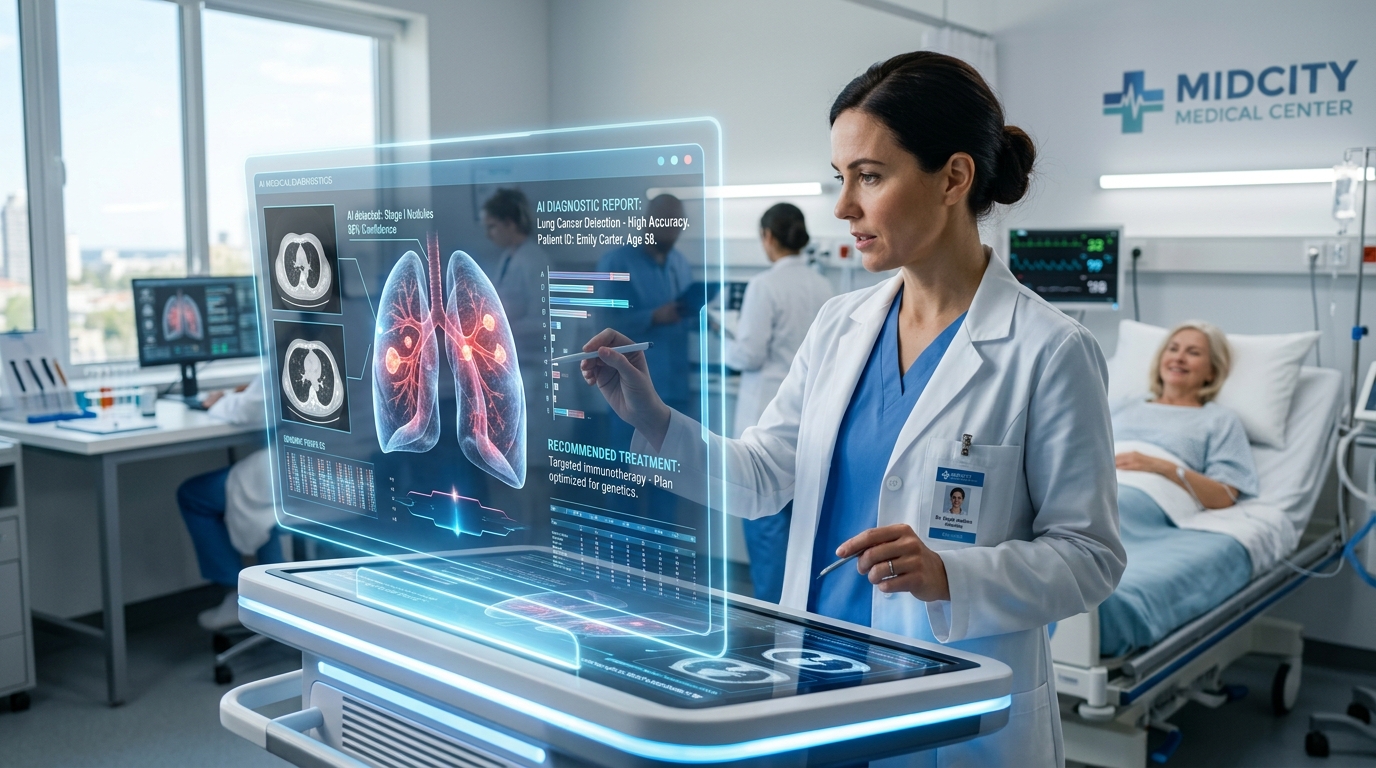
Artificial intelligence is transforming healthcare by improving how diseases are detected, diagnosed, and treated. Modern medical systems increasingly rely on AI tools to analyze large amounts of patient data, identify patterns, and support clinical decisions. This shift is making healthcare faster, more accurate, and more personalized, while also helping doctors reduce errors and improve patient outcomes across hospitals and clinics worldwide.
AI in Medical Diagnostics
Early Disease Detection Systems
AI systems can detect diseases at an early stage by analyzing medical images, lab results, and patient history. Early detection improves survival rates and allows doctors to begin treatment before conditions become severe, especially in diseases like cancer and heart disorders.
Medical Imaging Analysis
AI-powered imaging tools assist radiologists in interpreting X-rays, MRIs, and CT scans with high accuracy. These systems highlight abnormalities that may be missed by the human eye, improving diagnostic precision and reducing workload for medical professionals.
Pattern Recognition in Symptoms
AI identifies patterns in patient symptoms by comparing large datasets from similar cases. This helps doctors recognize diseases faster and improves diagnostic consistency, especially for complex or rare medical conditions.
Predictive Risk Assessment
Predictive AI models evaluate patient risk levels for developing certain diseases based on genetics, lifestyle, and medical history. This enables preventive care strategies and reduces long-term healthcare costs.
Lab Test Automation
AI automates the analysis of laboratory tests, improving speed and reducing human error. Automated systems ensure accurate results and allow healthcare providers to focus more on patient care rather than manual processing.
AI in Personalized Treatment
Precision Medicine Approaches
AI enables precision medicine by tailoring treatment plans based on individual patient data. This improves effectiveness by ensuring therapies match genetic profiles and medical conditions more accurately.
Treatment Plan Optimization
AI systems help doctors design optimized treatment plans by analyzing outcomes from similar patients. This increases the chances of successful recovery while minimizing side effects and complications.
Drug Response Prediction
AI predicts how patients will respond to specific medications, reducing trial-and-error prescribing. This leads to safer treatments and faster recovery times for patients with chronic or complex diseases.
Real Time Patient Monitoring
AI-powered monitoring systems track patient vitals in real time using wearable devices and hospital equipment. These systems alert healthcare providers immediately when abnormalities are detected.
Rehabilitation Support Systems
AI assists in rehabilitation by customizing physical therapy programs and tracking patient progress. This ensures faster recovery and better long-term physical outcomes for injured or recovering patients.
AI in Surgery and Clinical Procedures
Robotic Assisted Surgery
AI-powered robotic systems assist surgeons in performing precise and minimally invasive procedures. These systems reduce complications, improve accuracy, and shorten patient recovery time.
Surgical Planning Assistance
AI helps surgeons plan complex operations by simulating procedures and predicting possible risks. This improves decision-making and enhances surgical success rates.
Intraoperative Guidance Tools
During surgery, AI provides real-time guidance by analyzing data and imaging. This helps surgeons make quick and accurate decisions during critical moments.
Post Surgical Recovery Tracking
AI systems monitor patients after surgery to track recovery progress and detect complications early. This improves patient safety and reduces hospital readmission rates.
Minimally Invasive Techniques
AI supports the development of less invasive surgical methods that reduce pain, scarring, and recovery time, improving overall patient experience.
AI in Drug Discovery and Development
Accelerated Drug Research
AI speeds up drug discovery by analyzing chemical compounds and predicting their effectiveness. This reduces the time needed to develop new medications.
Molecular Simulation Modeling
AI simulates molecular interactions to identify potential drug candidates more efficiently. This improves research accuracy and reduces laboratory testing costs.
Clinical Trial Optimization
AI improves clinical trials by selecting suitable participants and analyzing results more effectively. This increases trial success rates and reduces development time.
Side Effect Prediction
AI predicts potential side effects of new drugs before they reach patients. This improves safety and reduces risks associated with new treatments.
Pharmaceutical Innovation Support
AI supports pharmaceutical companies in creating innovative treatments by identifying new opportunities in disease research and medication development.
AI in Healthcare Administration
Hospital Workflow Automation
AI automates administrative tasks such as scheduling, billing, and patient records management. This improves efficiency and reduces operational costs in healthcare facilities.
Resource Allocation Systems
AI helps hospitals allocate resources like beds, staff, and equipment more efficiently based on patient demand and urgency.
Patient Data Management
AI organizes and secures large volumes of patient data, ensuring easy access for healthcare professionals while maintaining privacy and compliance.
Appointment Scheduling Optimization
AI improves appointment systems by reducing wait times and optimizing doctor availability, enhancing patient satisfaction.
Healthcare Cost Reduction
AI reduces healthcare costs by improving efficiency, preventing unnecessary treatments, and optimizing hospital operations.
AI in Remote Healthcare Services
Telemedicine Enhancement
AI improves telemedicine by assisting doctors in virtual consultations and providing real-time diagnostic support during remote sessions.
Remote Patient Monitoring
Wearable devices powered by AI track patient health from home, allowing continuous monitoring without hospital visits.
Mobile Health Applications
AI-driven health apps provide personalized health advice, symptom checking, and medication reminders to patients.
Rural Healthcare Access
AI helps extend healthcare services to remote areas by enabling digital diagnostics and remote consultations.
Emergency Response Systems
AI improves emergency healthcare response by predicting critical situations and alerting medical teams faster.
Challenges and Ethical Considerations
Data Privacy Concerns
AI systems require large amounts of sensitive patient data, raising concerns about privacy protection and data security.
Medical Bias Issues
AI can sometimes reflect bias in training data, leading to unequal treatment outcomes for different patient groups.
Human Dependency Risks
Overreliance on AI may reduce human judgment in medical decisions, which can be risky in complex cases.
Regulatory Compliance Challenges
Healthcare AI must meet strict regulations to ensure safety, accuracy, and ethical use in medical environments.
Technology Accessibility Gaps
Not all healthcare systems have equal access to advanced AI tools, creating disparities in treatment quality.
How is AI used in healthcare diagnostics?
AI analyzes medical data and images to detect diseases early and improve diagnostic accuracy.
Can AI replace doctors?
No, AI supports doctors but cannot replace human expertise and decision-making.
Is AI in healthcare safe?
AI is generally safe when properly regulated and used alongside medical professionals.
What are benefits of AI in treatment?
AI improves precision, speeds up treatment, and reduces medical errors.
How does AI help hospitals?
AI automates tasks, improves efficiency, and enhances patient care systems.
Conclusion
AI is revolutionizing healthcare diagnostics and patient treatment by making medical systems faster, more accurate, and more personalized. From early disease detection to robotic surgery and remote monitoring, AI supports doctors and improves patient outcomes. While challenges like privacy and bias remain, the future of healthcare is becoming more efficient and accessible through responsible and innovative use of artificial intelligence.
