


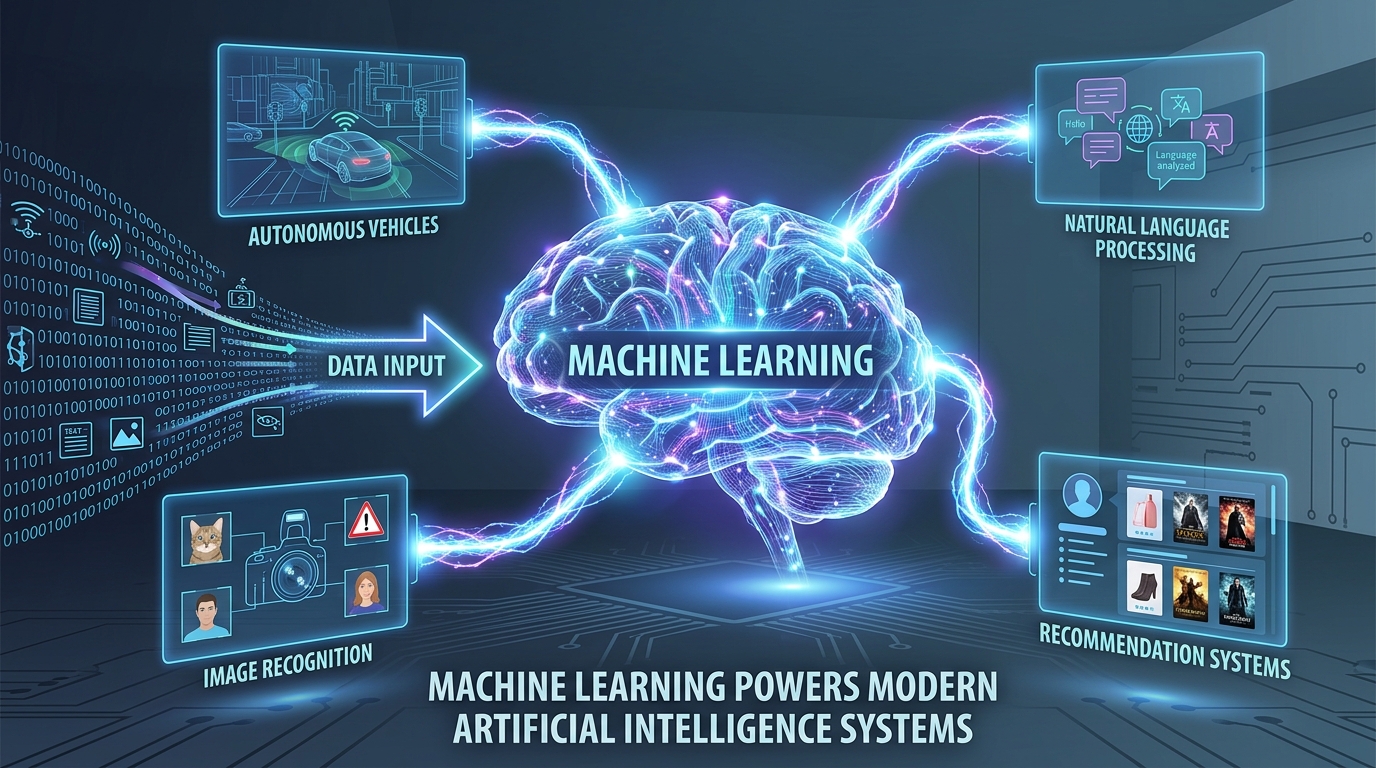
Machine learning is the core technology behind most modern artificial intelligence systems. It enables computers to learn from data, identify patterns, and make decisions without being explicitly programmed for every task. From search engines and recommendation systems to self-driving cars and medical diagnostics, machine learning is powering a new generation of intelligent systems that are transforming industries and everyday life.
Foundations of Machine Learning
Understanding Data-Driven Learning
Machine learning works by training algorithms on large amounts of data. Instead of following fixed rules, systems learn patterns from examples. This data-driven approach allows machines to improve their performance over time and make more accurate predictions in real-world applications.
Role of Algorithms
Algorithms are step-by-step processes that guide how machines learn from data. Different algorithms are used for classification, prediction, and pattern recognition. These algorithms help AI systems process complex information efficiently and accurately.
Training and Testing Models
Machine learning models are trained using datasets and then tested to measure their accuracy. Training helps the system learn patterns, while testing ensures it performs well on new, unseen data. This process improves reliability and performance.
Importance of Features
Features are specific data points used by machine learning models to make decisions. Selecting the right features improves accuracy and reduces errors. Good feature selection is essential for building effective AI systems.
Data Quality Impact
High-quality data is crucial for machine learning success. Clean, accurate, and relevant data improves model performance, while poor data can lead to incorrect predictions and unreliable results.
Types of Machine Learning
Supervised Learning Systems
Supervised learning uses labeled data to train models. The system learns from input-output examples and makes predictions based on that knowledge. It is widely used in spam detection and image recognition.
Unsupervised Learning Methods
Unsupervised learning works with unlabeled data to find hidden patterns or groupings. It is commonly used in customer segmentation and data clustering applications.
Reinforcement Learning Techniques
Reinforcement learning teaches systems through rewards and penalties. The model learns by interacting with an environment and improving decisions over time. It is used in robotics and game AI.
Semi-Supervised Learning
Semi-supervised learning combines small amounts of labeled data with large unlabeled datasets. This approach improves efficiency when labeling data is expensive or time-consuming.
Deep Learning Networks
Deep learning uses neural networks with many layers to process complex data like images, speech, and text. It powers advanced AI systems such as voice assistants and facial recognition.
Applications of Machine Learning
Search Engine Optimization
Machine learning improves search engines like Google by ranking results based on user behavior, relevance, and quality of content.
Recommendation Systems
Platforms like Netflix use machine learning to suggest movies and shows based on viewing history and preferences.
Healthcare Diagnostics
Machine learning helps doctors detect diseases early by analyzing medical images, patient records, and symptoms for accurate diagnosis.
Fraud Detection Systems
Banks use machine learning to detect unusual transactions and prevent fraud in real time, improving financial security.
Autonomous Vehicles
Self-driving systems use machine learning to interpret road conditions, recognize objects, and make driving decisions safely.
How Machine Learning Powers AI Systems
Pattern Recognition Ability
Machine learning enables AI systems to identify patterns in large datasets, making them capable of understanding complex information like images and speech.
Predictive Capabilities
AI systems use machine learning to predict future outcomes based on historical data, improving decision-making across industries.
Automation of Tasks
Machine learning automates repetitive and complex tasks, reducing human effort and increasing efficiency in business operations.
Continuous Improvement
AI systems improve over time as they are exposed to more data, making them more accurate and reliable.
Real-Time Decision Making
Machine learning allows AI systems to make instant decisions in dynamic environments such as trading, navigation, and cybersecurity.
Challenges in Machine Learning
Data Privacy Concerns
Machine learning systems require large datasets, raising concerns about user privacy and data protection.
Bias in Algorithms
If training data is biased, AI systems may produce unfair or inaccurate results, affecting decision-making quality.
High Computational Costs
Training advanced models requires significant computing power, making it expensive and resource-intensive.
Lack of Explainability
Some machine learning models act as “black boxes,” making it difficult to understand how decisions are made.
Security Risks
AI systems can be vulnerable to attacks if not properly secured, leading to data manipulation or system failure.
Future of Machine Learning
Expansion of Artificial Intelligence
Machine learning will continue driving advancements in artificial intelligence across industries like healthcare, finance, and education.
Smarter Automation Systems
Future systems will automate more complex tasks, improving productivity and reducing human workload.
Integration with IoT
Machine learning will power smart devices in homes, cities, and industries through the Internet of Things.
Personalized Digital Experiences
AI will deliver highly personalized experiences in entertainment, shopping, and communication based on user behavior.
Human-AI Collaboration
Future workplaces will rely on collaboration between humans and AI systems to improve efficiency and innovation.
Conclusion
Machine learning is the foundation of modern artificial intelligence systems, enabling machines to learn, adapt, and make intelligent decisions. Its applications span across industries, transforming healthcare, business, transportation, and entertainment. As technology advances, machine learning will continue to drive innovation, making AI systems smarter, more efficient, and more deeply integrated into everyday life.
